
Bay parking: reversing in, driving in, and getting it straight
Where to stop, the moment to steer, and how to finish straight. Each step matches the numbers on the picture, and there is a quiz at the end.
On the test, the examiner may ask you to park in a bay either by driving in and reversing out, or reversing in and driving out
, and will tell you which. It is one of three reversing exercises, and you will be asked to do one of them. What happens during the test.
Whichever it is: pick a bay with room to get in and open your doors, keep to a very slow walking pace (clutch control in a manual, let it creep in an automatic), and look all round the whole time. People walk through car parks, often from between parked cars.
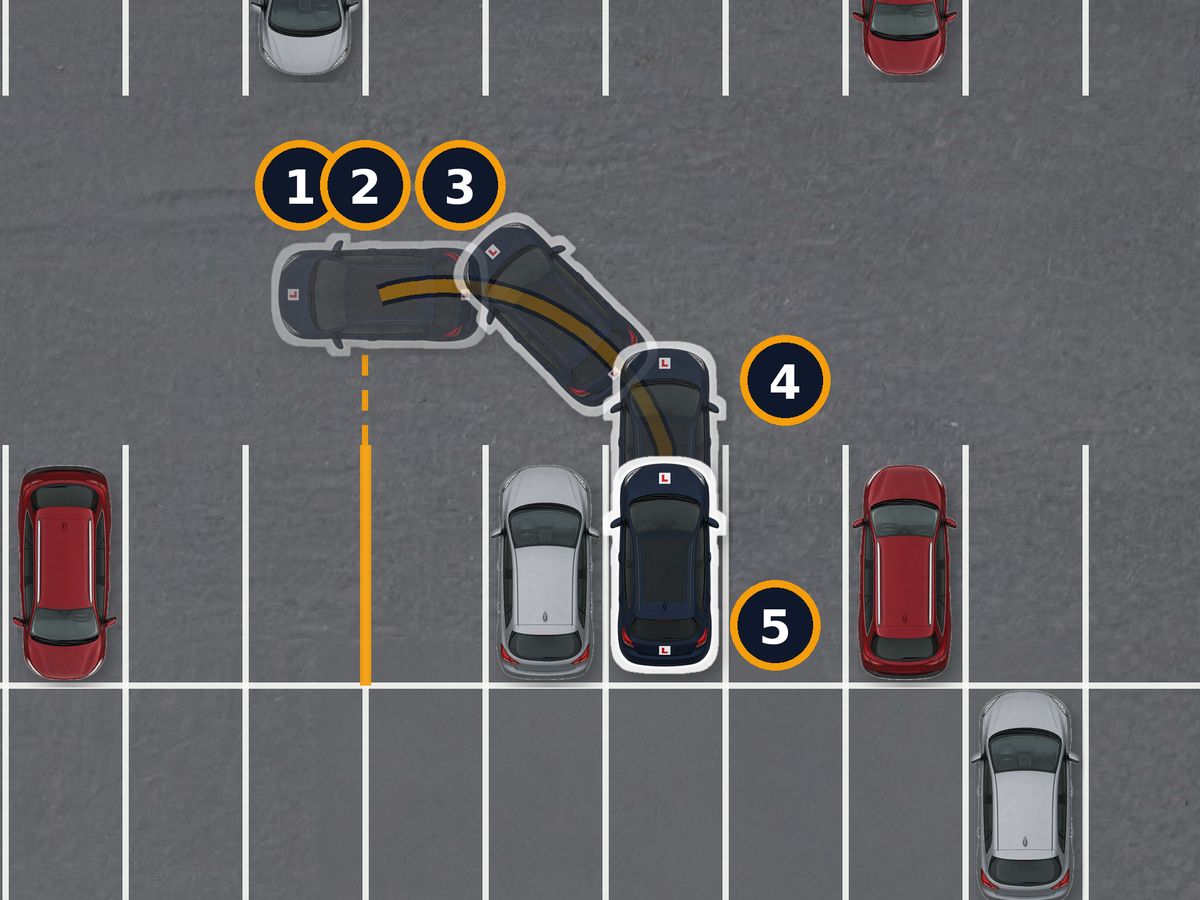
Reversing into a bay on your left
Drive slowly past the bay, well out from the row
Leave about a car's width or more between you and the ends of the bays. It gives the car room to swing in. Check your mirrors and signal if anyone is about.
Stop with your passenger door level with the line two bays past yours
Stop straight, parallel with the row. This is your point of turn. It varies a little by car, so check it with your instructor.
Look all round, then reverse slowly on full left lock
Mirrors, both blind spots and out of the rear window. If it is clear, steer full lock towards the bay (left for a bay on your left) as the car creeps back. Watch the front swing out.
When the lines look even in both door mirrors, straighten up
The bay's first line appears in your left mirror, then the other line in your right. When they look parallel and the gaps even, take the steering back to straight.
Reverse straight back and stop inside the lines
Keep checking both mirrors and looking all round. Stop once the whole car is inside the bay, about level with the cars either side, then secure the car.
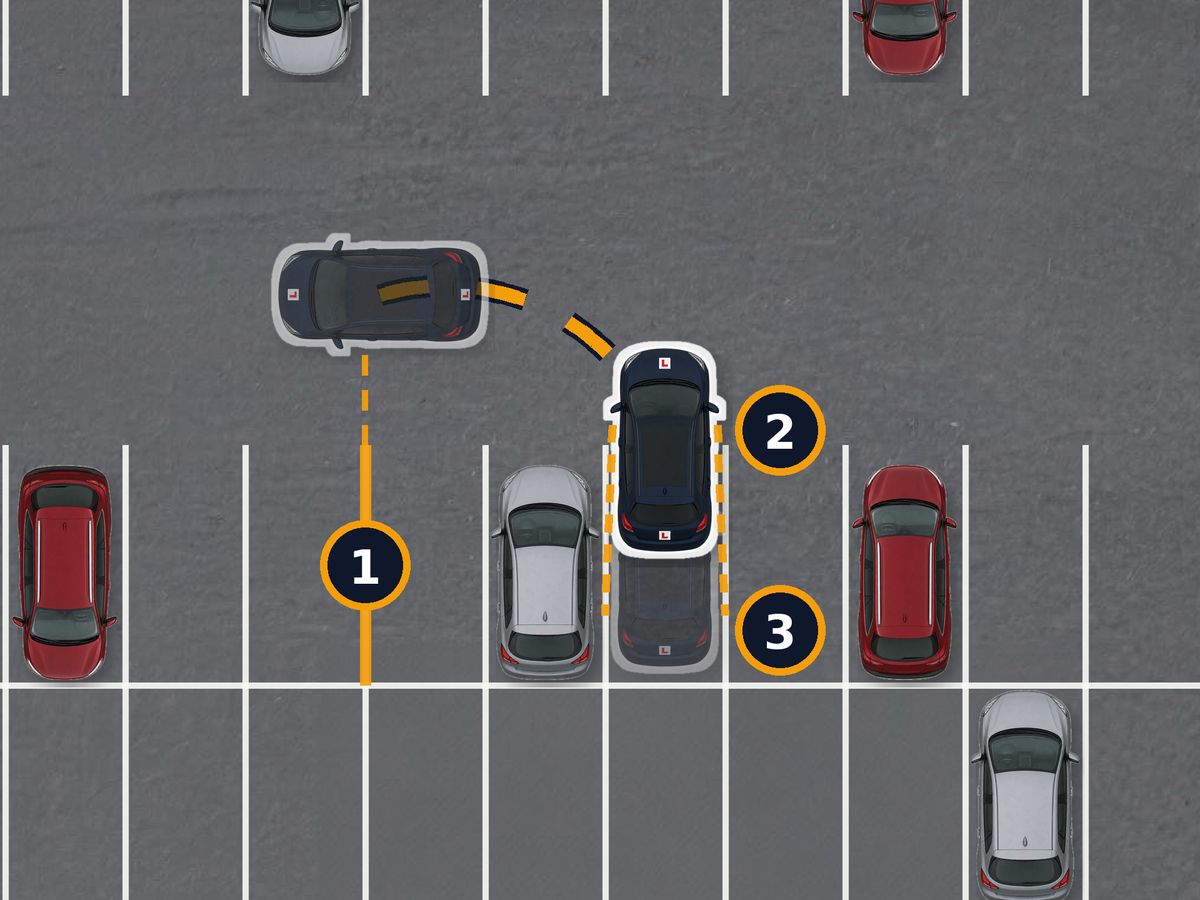
The reference points
Door level with the line two bays on
Your passenger door level with the line two bays past yours: the point of turn. Look all round, then full lock.
Lines even in both mirrors
The bay's lines show in your left mirror, then your right. When they look parallel and the gaps even, straighten up.
Inside the lines
Stop once the whole car is in the bay, about level with the cars either side.
Reference points vary a little by car. A longer car or a tighter lock moves them slightly, so try them in the car you will take your test in.
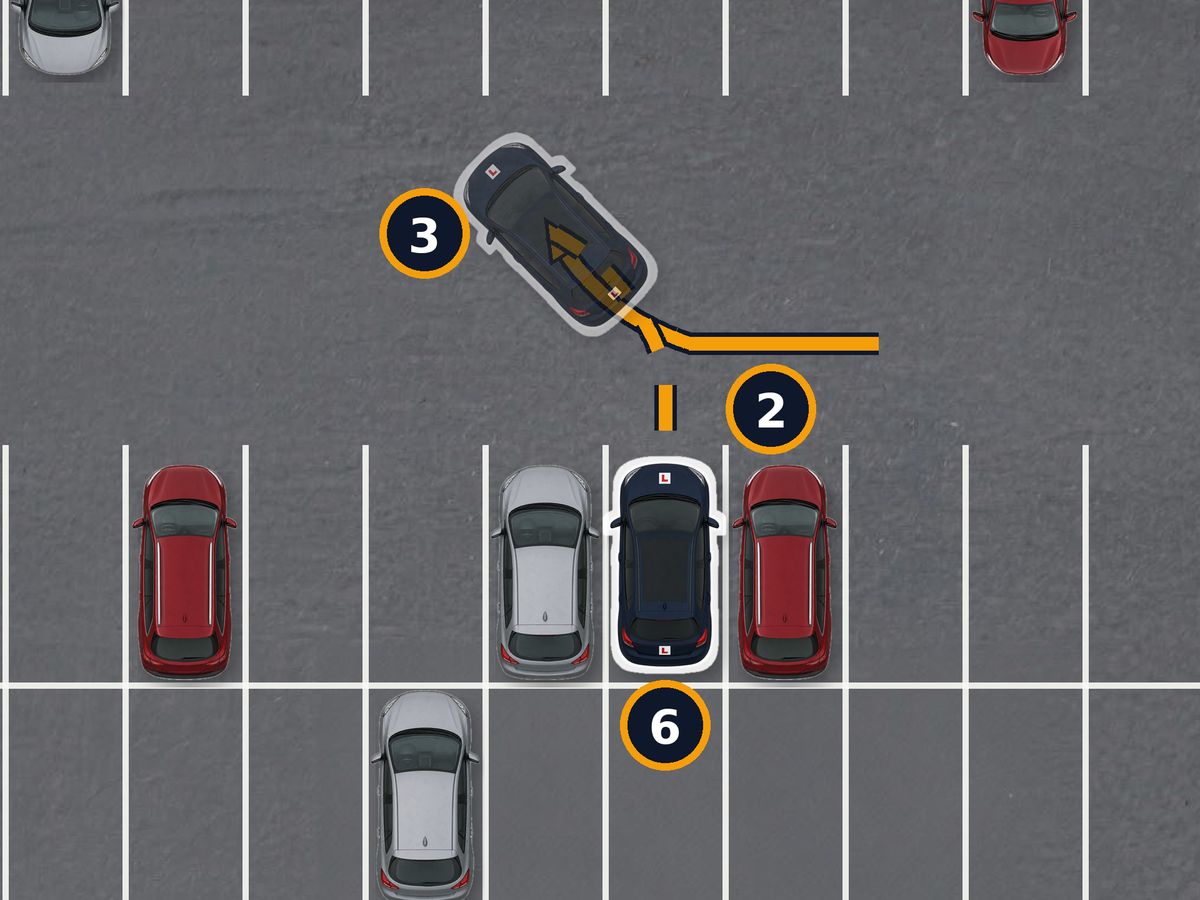
Angling out first: the 45 degree set-up
Another way in that many instructors teach. You do half of the turn going forwards, so the back of the car drops into the bay straighter. It helps when the bays either side are full or narrow, as long as the aisle in front of you is clear.
Drive slowly past, about a metre from the bays
Closer than for the usual way: you need the width of the aisle in front of you. Check your mirrors and signal if it would help anyone.
Mirror level with the bay: check right, steer right
As your left door mirror comes level with the middle of the bay (its lines are just going out of sight under the front of the car), look over your right shoulder, then steer full right and creep forward across the aisle.
At about 45 degrees: stop
Stop when the car is about halfway between along the aisle and facing the far row, with the back pointing towards your bay. Keep clear of the cars opposite.
Look all round, then reverse on full left lock
Mirrors, both blind spots and out of the rear window. As you creep back, the bay's left line shows in your left mirror first, then the right line in your right mirror.
Lines even in both mirrors: straighten up
When the lines look parallel and the gaps even, take the steering back to straight.
Back in straight, stop inside the lines
Keep looking all round and stop once the whole car is in the bay, about level with the cars either side.
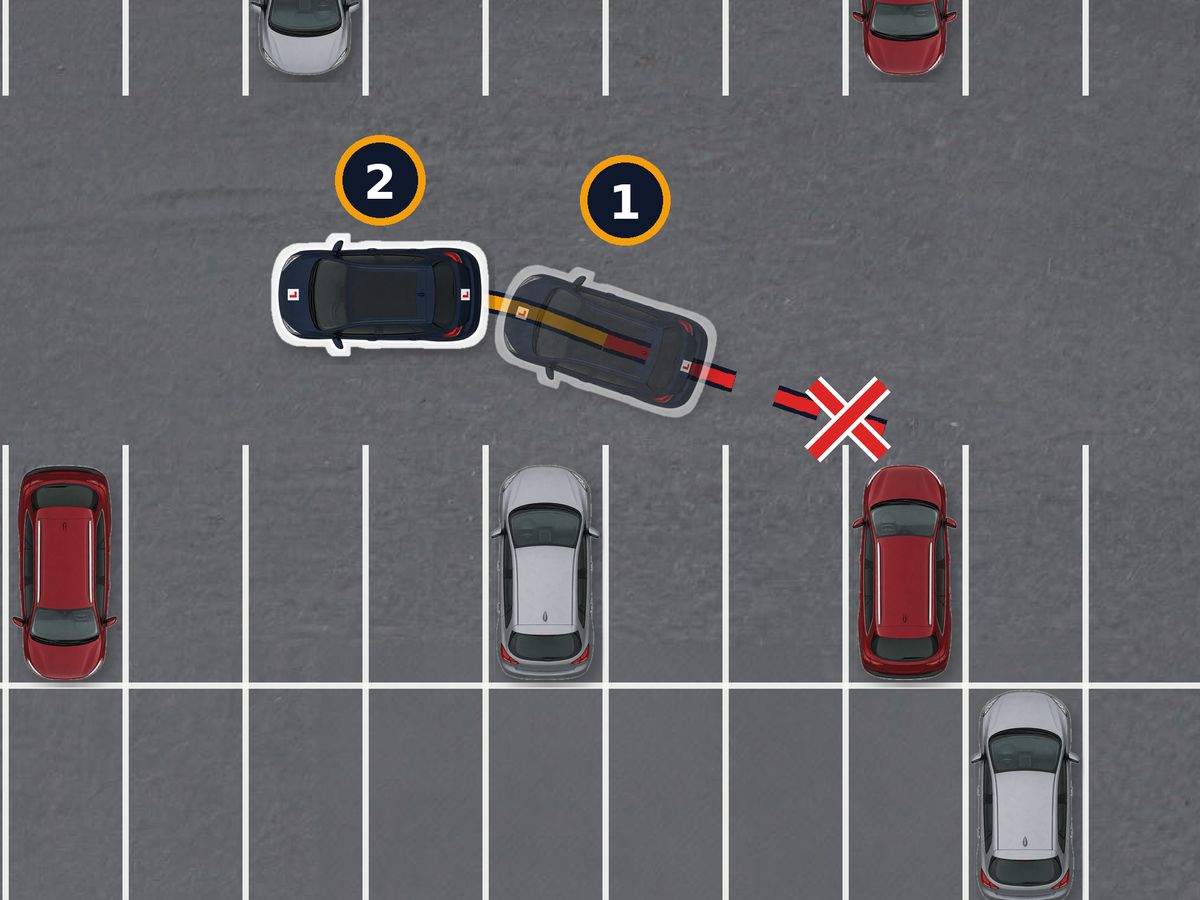
Stopped at an angle you did not plan?
Do not just reverse from where you are
From an angle you did not set up, the reference points no longer work, and the car can cut across the lines or towards the cars already parked.
Drive forward to set up again
Look all round, drive forward until you are straight with the bays, then reverse in as normal. Or, if the aisle is clear, carry on into the 45 degree set-up above.
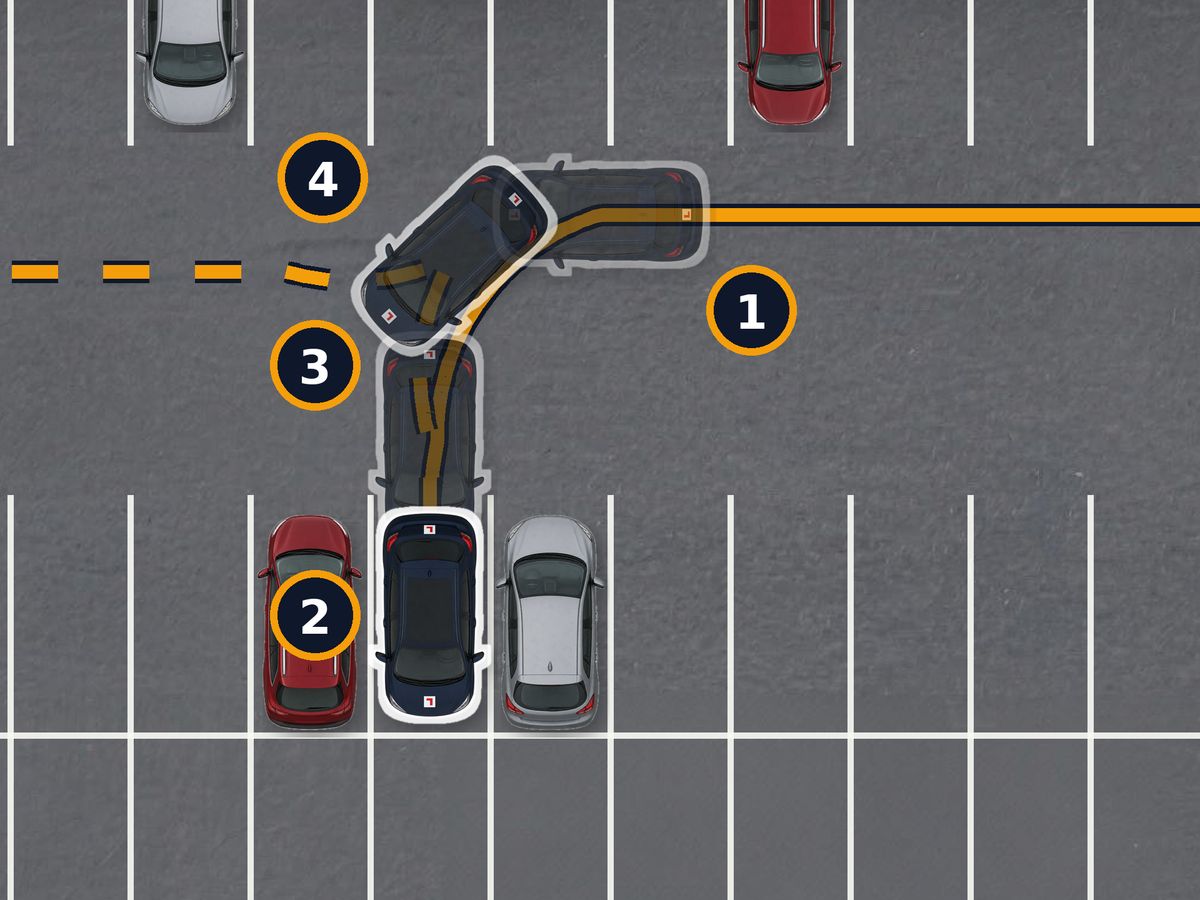
Driving in, then reversing out
Keep well wide, then full lock
Use the far side of the aisle. Start to steer just before your door mirror reaches the bay's first line, then ease the lock off as the car comes straight, so it goes in square.
Straight and central
Stop inside the lines, in the middle of the bay, before the front reaches the end of it.
Reverse out: straight back until your front is clear
Look all round first, then reverse slowly. Cars and people come along the aisle behind you. Only steer once your front has cleared the car beside you: the front swings towards it.
Room to drive off: stop
Stop while you are still in the aisle, look round, then drive away, straightening up as you go.
If it goes wrong
- Going in crooked? Stop. If there is room, drive forward a little to straighten up, then reverse back in. Look all round before each move.
- Crossed a line on the way in? The examiners' guidance says candidates should
not normally be penalised for crossing the lines when entering the bay
. Where you finish is what counts. - Finishing over the lines?
Parking outside the bay is unacceptable.
Correct it if you safely can. - Someone walks behind you? Stop and wait. Look all round again before you carry on.
Bay parking quiz
Ready when you are
- 10 questions
- About 3 minutes
- Answers explained
- Nothing saved
Questions people ask
How do I know when to turn into a parking bay?
For reversing into a bay on your left: drive past well out, and stop with your passenger door level with the line two bays past yours. Look all round, then reverse slowly on full left lock. When the bay lines look even in both door mirrors, straighten up and reverse straight in. The exact point varies a little from car to car, so practise it with your instructor.
Is it better to reverse into a parking space?
Usually, yes. You can drive out forwards and see much more of the car park and anyone walking through it than you can when reversing out between other cars.
Can I correct a bay park on the driving test?
Yes, if you do it safely. The examiners' guidance lets you drive forward to adjust your angle, and says you should not normally be penalised for crossing the lines when entering the bay
. Finishing outside the bay is the problem: Parking outside the bay is unacceptable.
Which bay park will I get on the test?
GOV.UK says the examiner may ask you to park in a bay either by driving in and reversing out, or reversing in and driving out
, and will tell you which. It is one of three reversing exercises; you will get one of them.
Signed in
You are already on Driving Test Hero
Signed in as . Your test, your matches and your email settings are on My swaps.
Go to My swapsFree · about a minute
Not ready for your test date?
You do not have to sit it unready. Most learners want an earlier test, so someone at your centre may well want yours, and a swap gives you their later date with no new fee. DVSA does it over the phone. Ready sooner? It works the other way too. We email you when a learner who could swap with you joins, and your email is never shown to anyone.
Already signed up? Sign in
One email to confirm, no password, and one click takes you off the list. How we handle your details.
No test booked yet? There is nothing to swap until you have one. Book on GOV.UK, then come back.