
Roundabouts: which lane, when to signal, and what to do on one
Which lane for each exit, when to signal, who to give way to, and what to do if it goes wrong. Each step matches the numbers on the picture, and there is a quiz at the end.
Traffic goes round clockwise. Give way to traffic coming from your right, unless signs, road markings or traffic lights tell you otherwise, and use mirrors, signal, manoeuvre at every stage. Decide on your exit early, from the signs on the approach, so you are in the right lane in good time.
Lanes and signals for each exit
Lane arrows and signs come first: where there are any, follow them. The pictures use a common layout, with the left-hand lane for left and straight on and the right-hand lane for right.
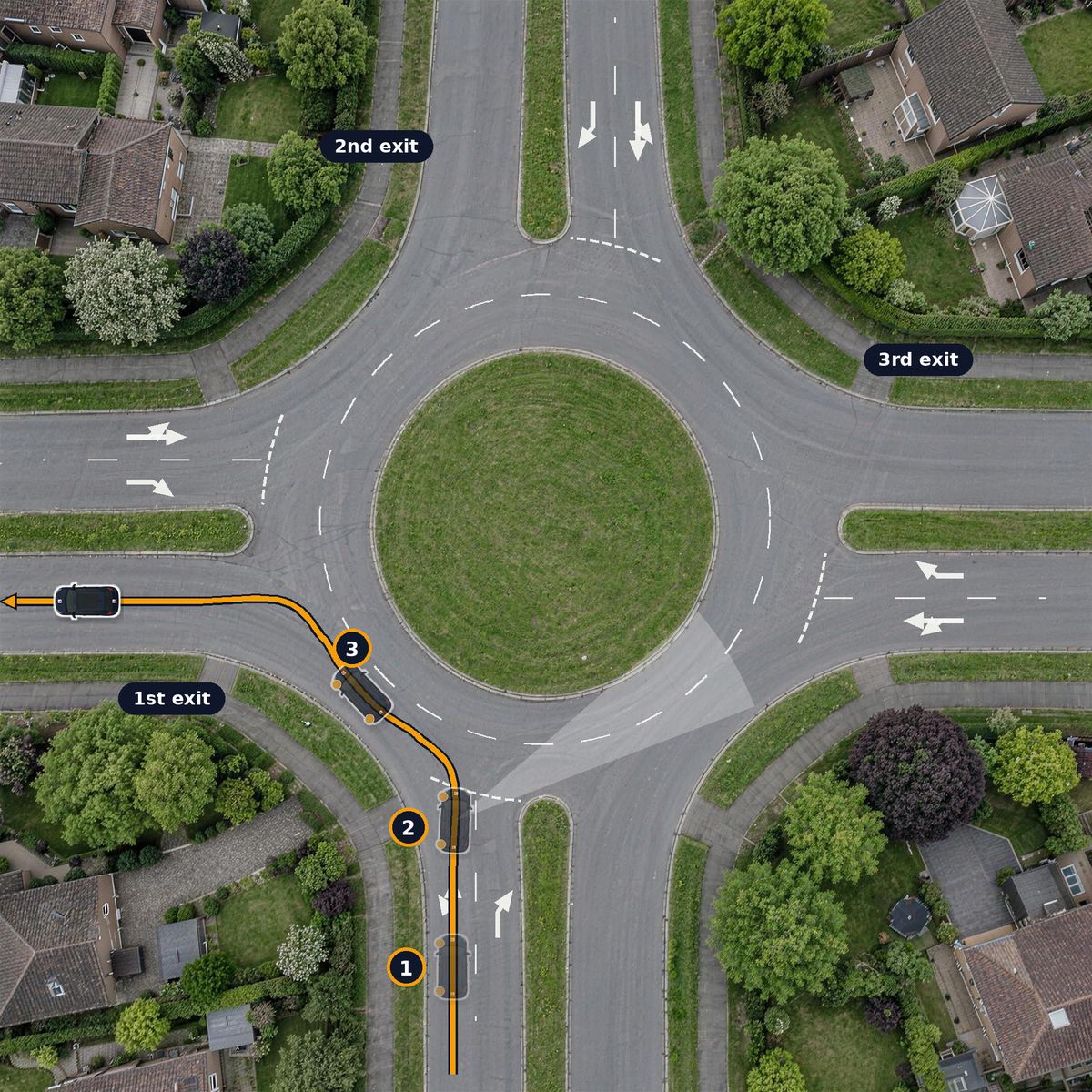
Turning left: the first exit
Approach in the left-hand lane
Mirrors, then signal left. Here the lane arrows say the left-hand lane is for left and straight on.
Give way to traffic from your right
Look right as you reach the line, and ahead for anyone already on the roundabout. Wait behind the line until there is a safe gap.
Keep left and keep signalling
Stay in the left-hand lane round to your exit, still signalling left as you leave.
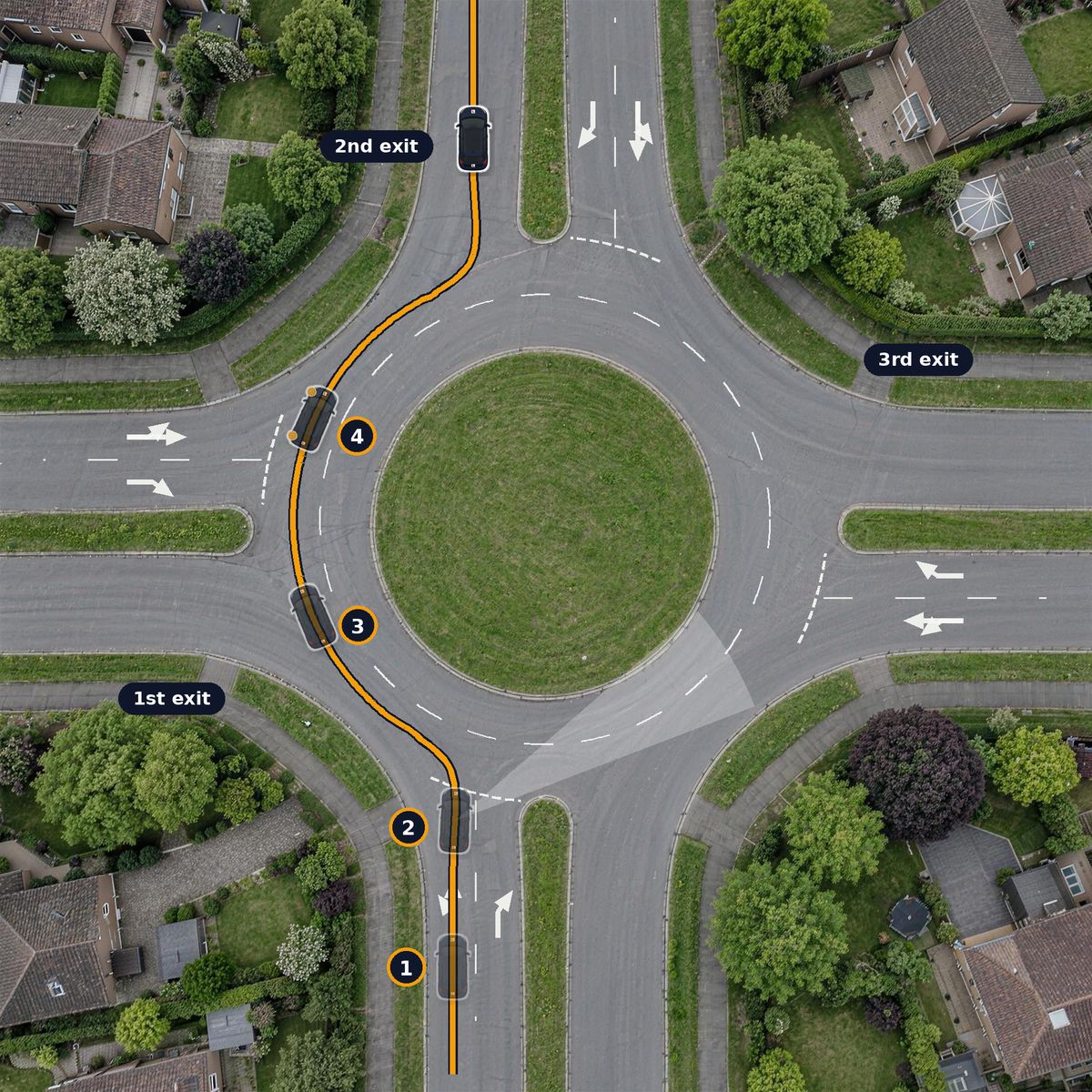
Straight on: an exit in between
Choose the lane for your exit
With no signs or markings, pick the lane that suits your exit. Here the arrows put straight on in the left-hand lane. There is no need to signal on the way in.
Give way to traffic from your right
Look right as you reach the line, and wait behind it for a safe gap.
Stay in your lane
Keep to the lane you chose until you need to leave.
Signal left after passing the exit before yours
Mirrors, signal left, and leave at your exit.
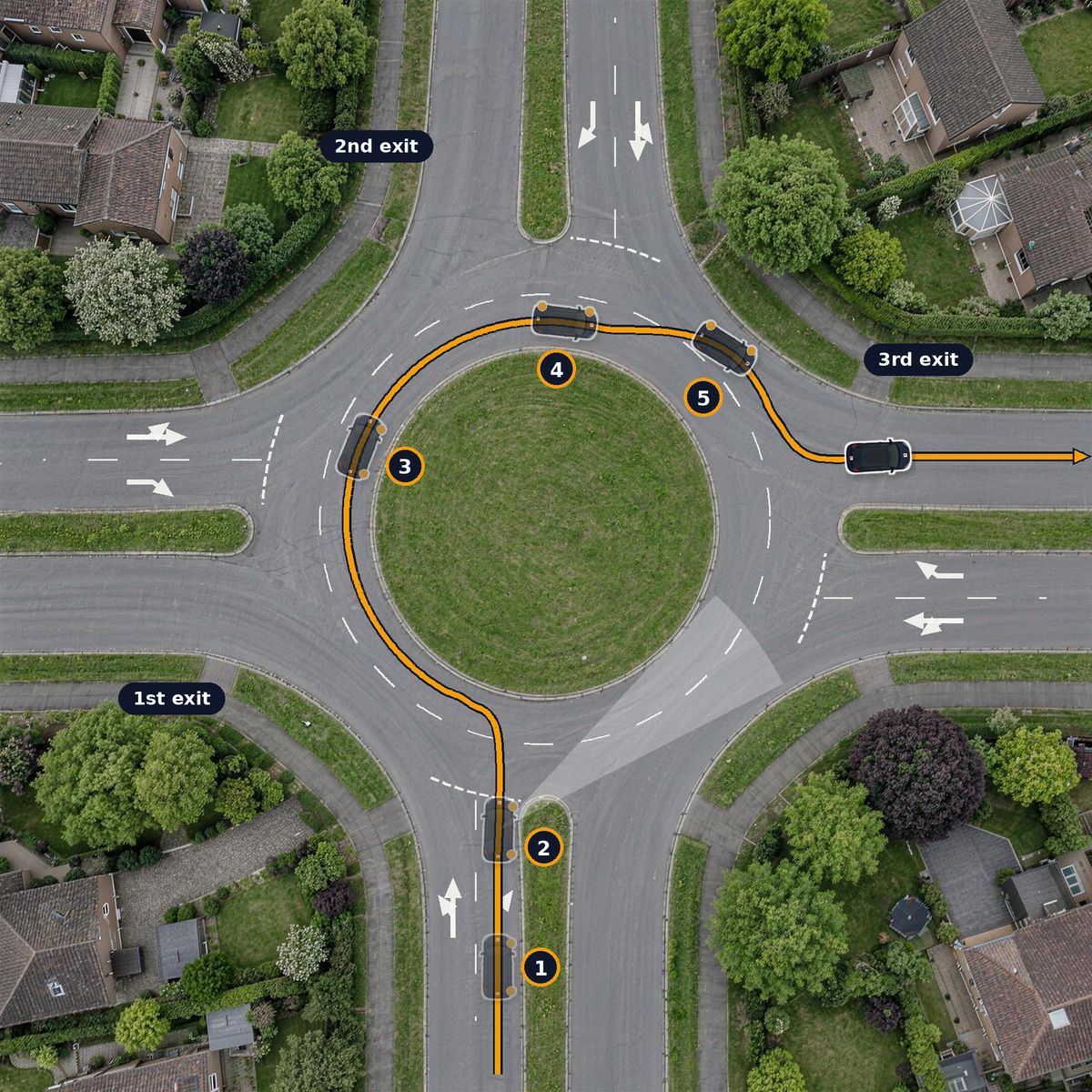
Turning right: the third exit, or going full circle
Approach in the right-hand lane, signalling right
Mirrors first. Here the right-hand lane has the right-turn arrow.
Give way to traffic from your right
Look right as you reach the line, and wait behind it for a safe gap.
Keep to the right-hand lane
Stay on the inside, still signalling right.
Passed the exit before yours? Signal left
Check your mirrors, and over your left shoulder for anything beside you, then signal left.
Move out and leave
Move into the left-hand lane when it is clear, and leave at your exit.
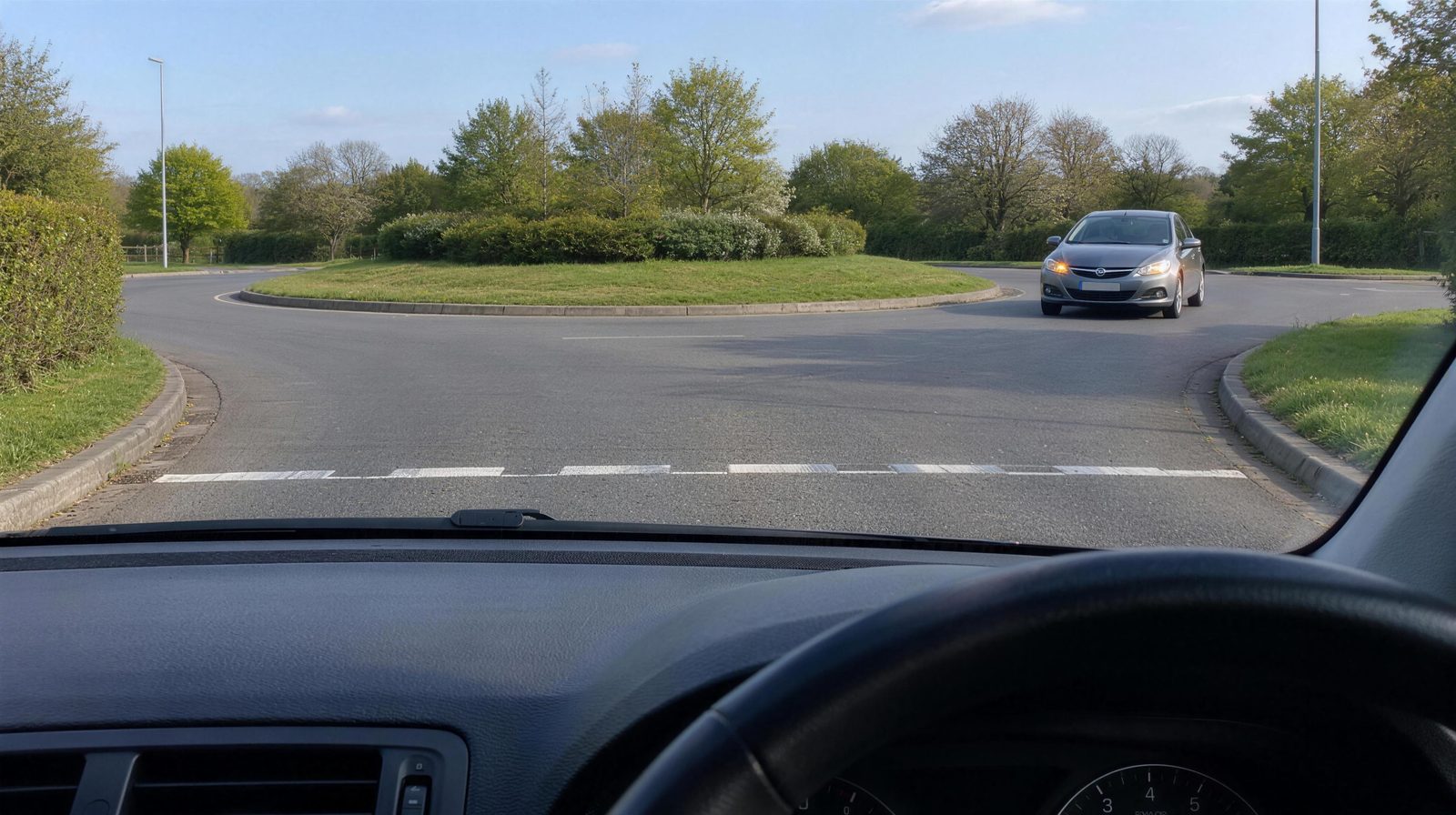
Giving way
At the broken white line, give way to traffic coming from your right. Look ahead as well: anyone already on the roundabout may be about to cross your path, and not everyone signals, or signals correctly. Before you move off, check that the car in front of you has actually gone: a lot of roundabout bumps are a car driving into the one ahead while looking right.
Here the car on the right is signalling right, so it is staying on and will pass in front of you. Wait. Had it been signalling left, it still might not turn off: wait until you can see it leaving.
Some roundabout entries are marked so you can go without giving way, and some have traffic lights. Check as you approach.
On the roundabout: who to watch for
- People cycling, riding horses or driving horse-drawn vehicles may stay in the left-hand lane all the way round, signalling right to show they are not leaving. Give them room, do not overtake a cyclist within their lane, and never cut across them.
- Long vehicles, and anyone towing, may need a different course or take up both lanes. Hang back.
- Traffic crossing in front of you, especially anyone heading for the next exit, and vehicles straddling lanes or in the wrong one.
- Motorcyclists, who are easy to miss.
- People crossing the roads on and off the roundabout.
Mini-roundabouts
The same rules as any roundabout, with less room and less time to signal. Every vehicle must go round the white circle, except large vehicles that physically cannot. Avoid U-turns at them, and watch for others making one.
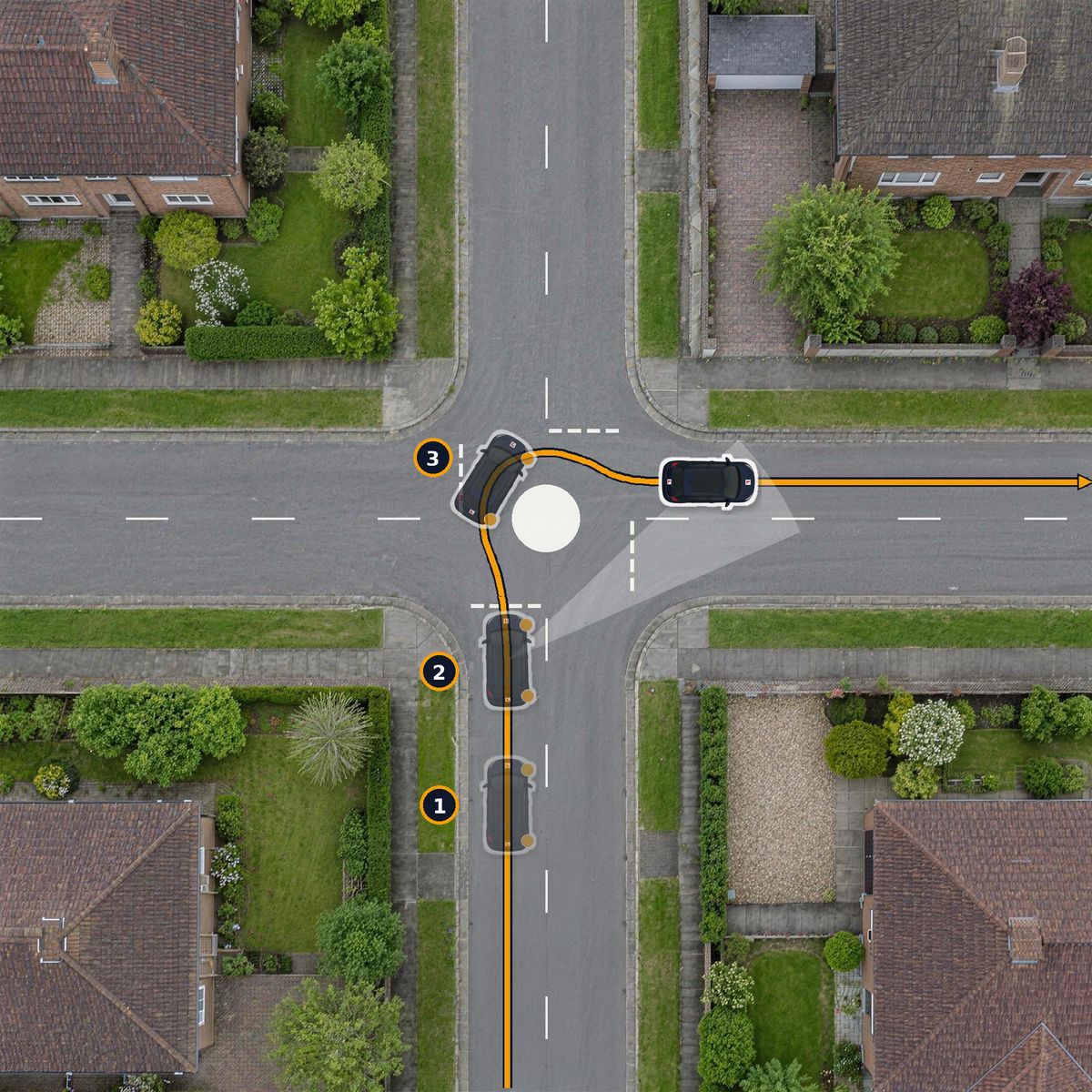
Turning right at a mini-roundabout
Mirrors, signal right
Keep to the left-hand side of your road.
Give way to traffic from your right
At the broken white line.
Go round the white circle, never over it
Signal left once you are past the road before yours, if there is time, and leave.
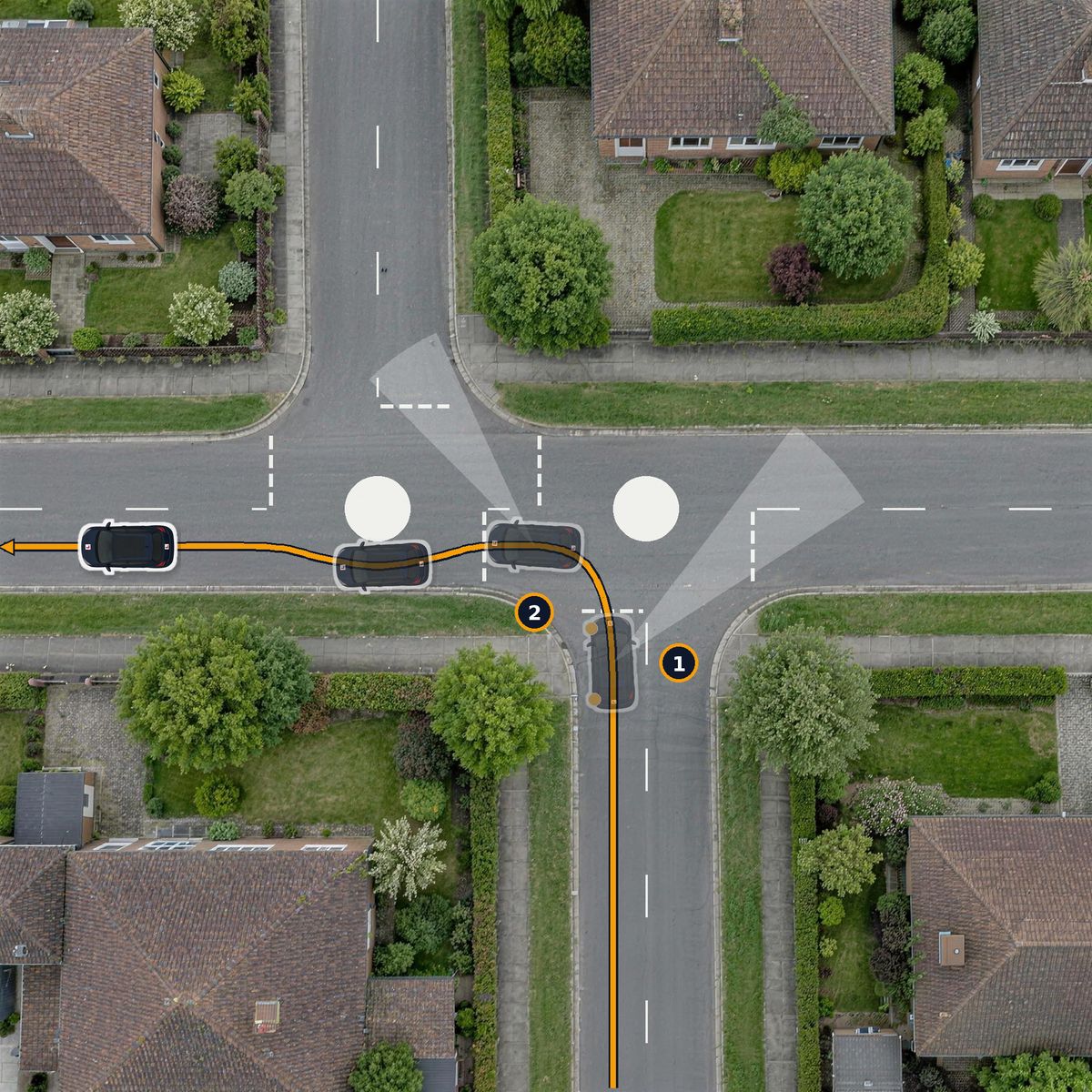
Double mini-roundabouts
Give way to traffic from your right at the first
Here you turn left at it.
Then again at the second
Treat each one as a separate roundabout, giving way to traffic from your right at each.
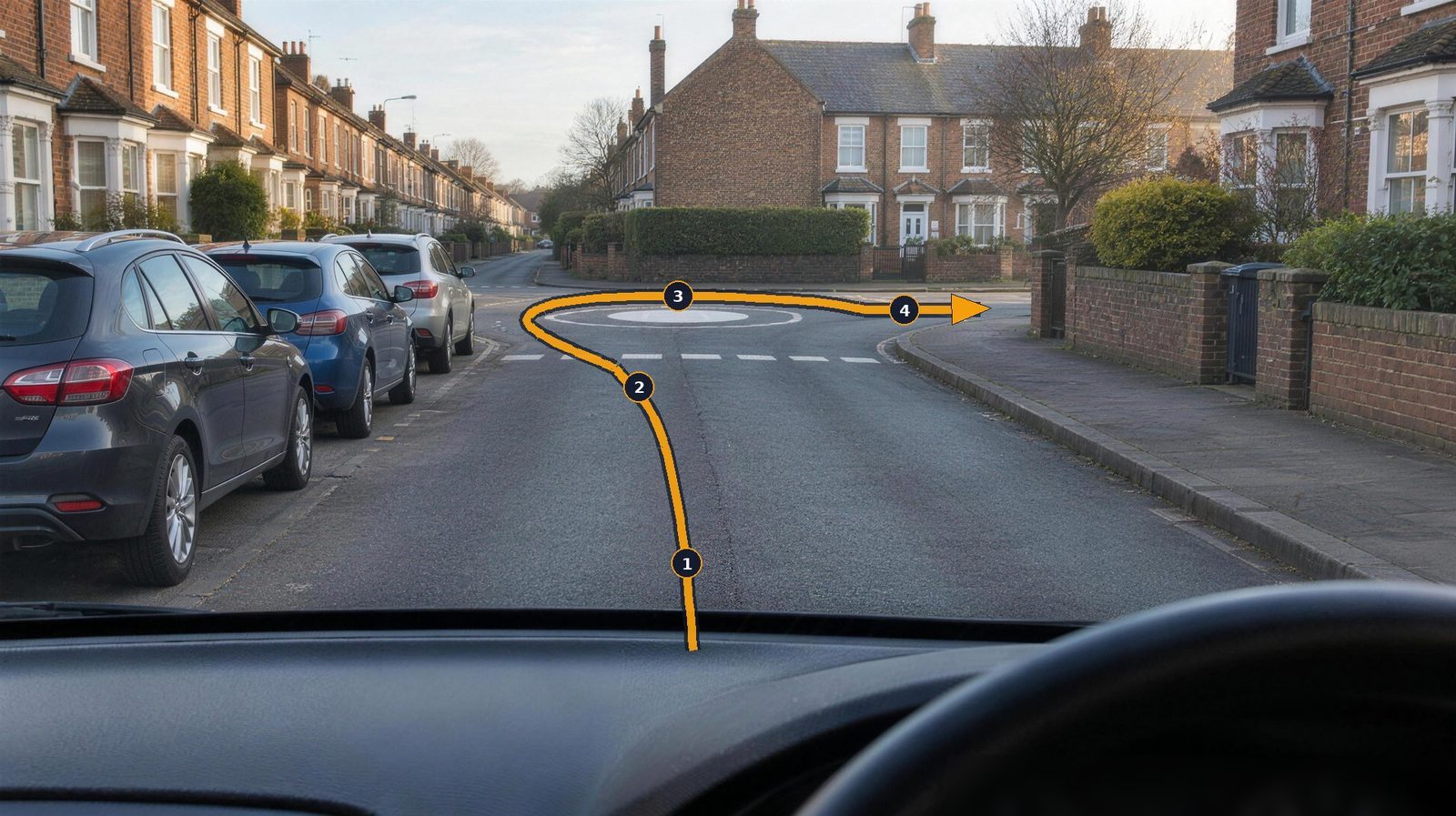
From the driver's seat
Mirrors, signal right.
Give way to traffic coming from your right.
Go round the white circle, never over it.
Leave the mini-roundabout. Signal left if there is time.
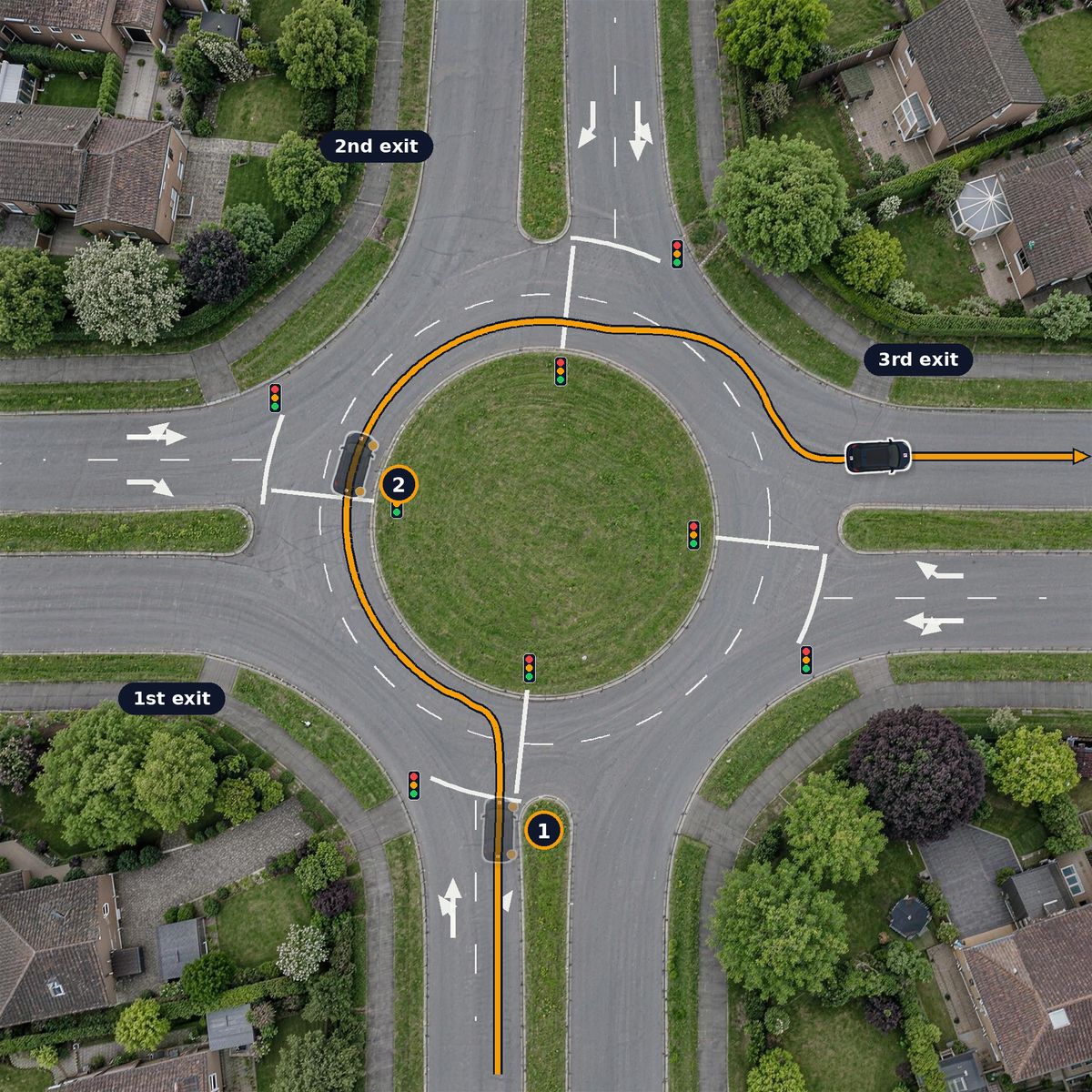
Roundabouts with traffic lights
Some roundabouts have traffic lights at the entries, and some on the roundabout itself as well. The lights take over from the give way rule: stop at the line whenever they show red, even when you are already on the roundabout.
Stop at the entry line on red
Go on green when it is clear, in the lane for your exit.
Stop again on the roundabout on red
Lanes and signals work as on any roundabout.
From the driver's seat
The same moves as you see them through the windscreen.
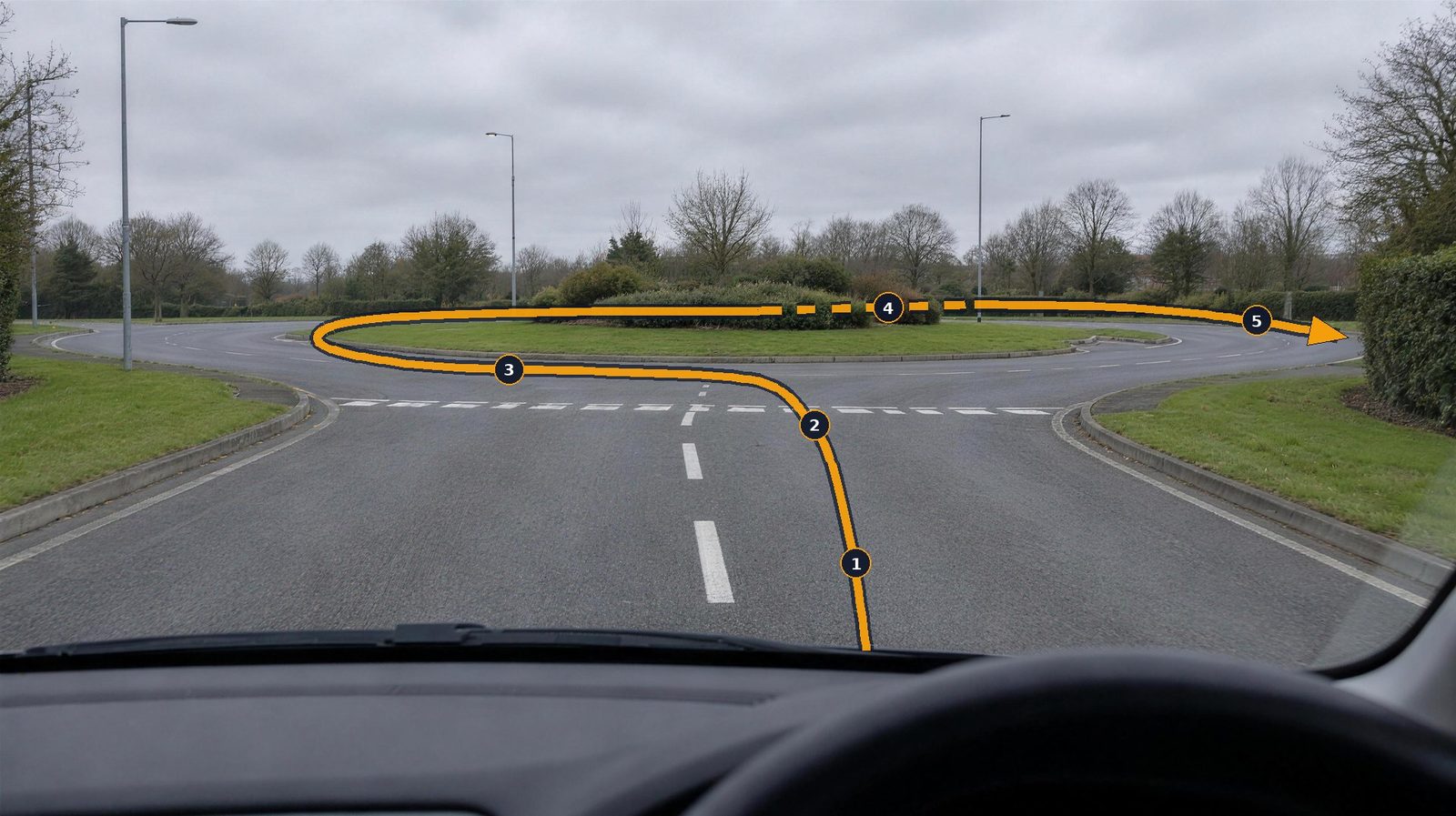
From the driver's seat: turning right
Mirrors, signal right, right-hand lane.
Give way to traffic coming from your right.
Keep to the right-hand lane on the roundabout.
Passed the exit before yours: mirrors, signal left, move out.
Leave at your exit, still signalling left.
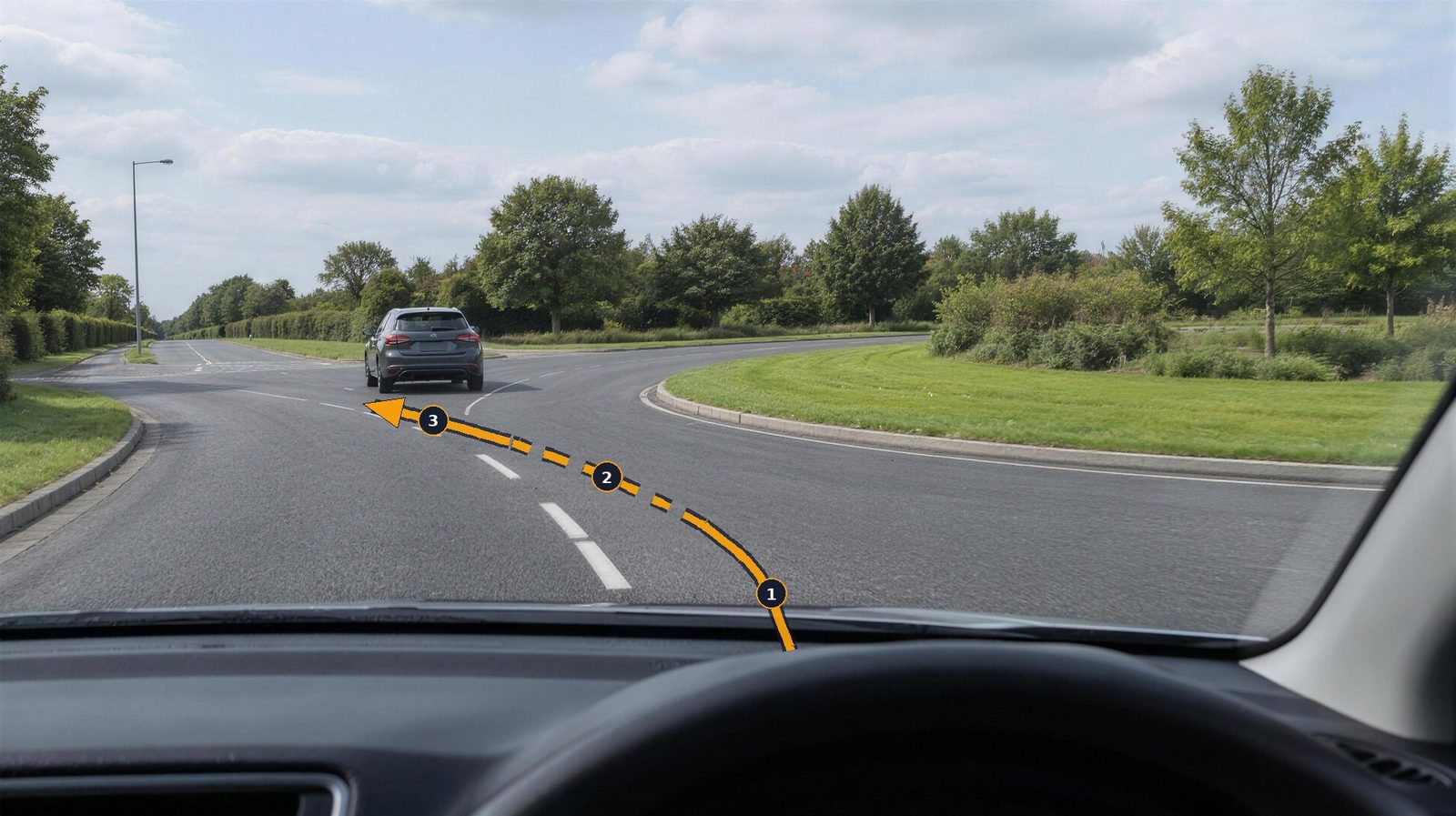
From the driver's seat: in the right-hand lane, and your exit is next
Mirrors and a look over your left shoulder, then signal left.
Move into the left-hand lane when it is clear, behind the car ahead.
Leave at your exit, still signalling left.
No safe gap? Stay in your lane and go round again.
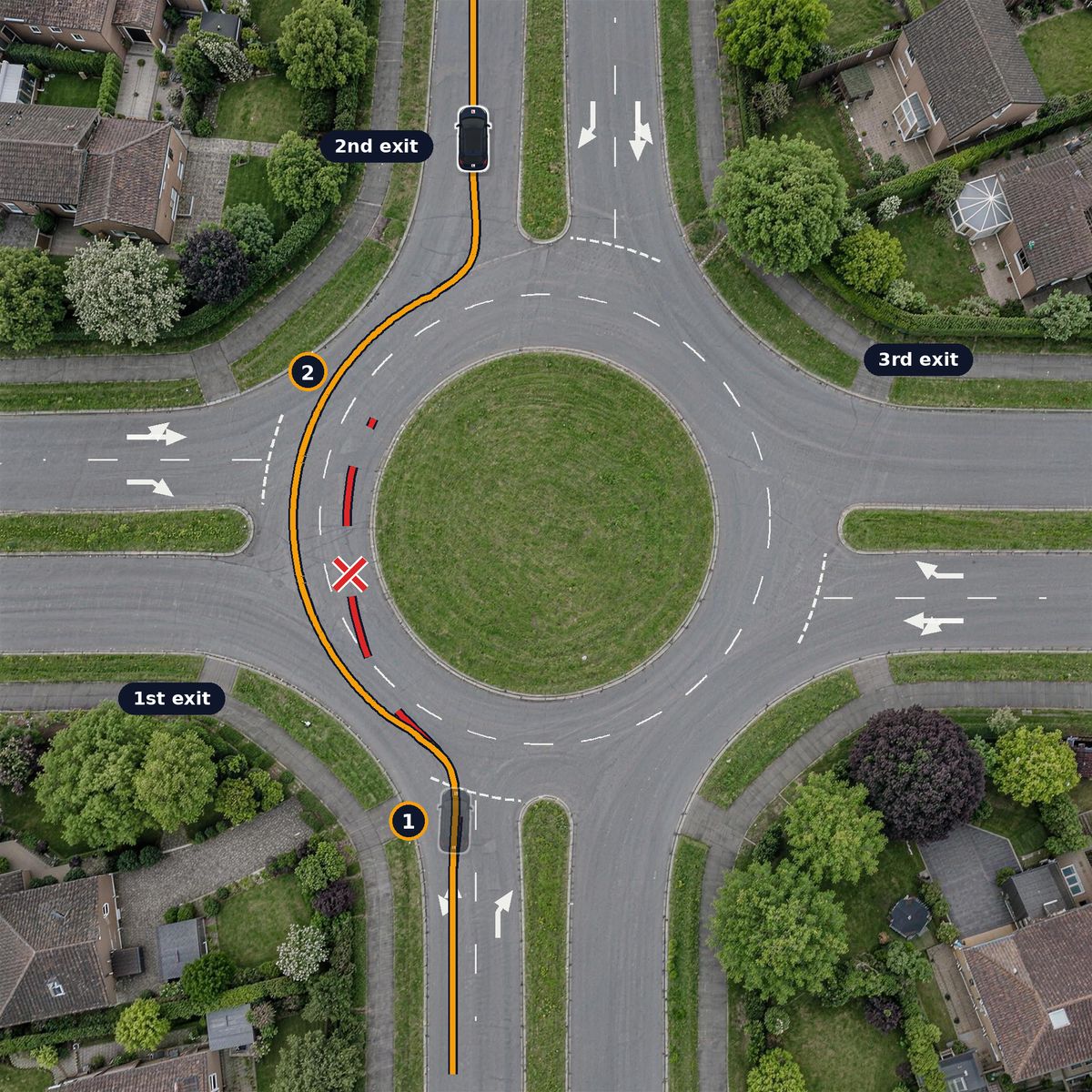
If it goes wrong
In the wrong lane? Stay in it
Do not cut across another lane on the roundabout. Take an exit your lane leads to and find a safe way back.
Missed your exit? Go round again
It costs a few seconds. A late swerve is what causes collisions.
On the test, DVSA says the examiner will not give you a fault
for taking a wrong turning, and will help you get back on the route. A mistake might not affect your test result if it's not serious
, so carry on driving safely. What happens during the test.
Roundabouts quiz
Ready when you are
- 10 questions
- About 3 minutes
- Answers explained
- Nothing saved
Questions people ask
Which lane do I use to go straight on at a roundabout?
Follow any lane arrows or signs. With none, pick the lane that suits your exit, and stay in it until you need to leave. There is normally no signal on the way in; signal left once you have passed the exit before yours.
When do I signal at a roundabout?
Turning left: signal left on the approach and keep signalling as you leave. Turning right: signal right on the approach, then signal left after passing the exit before yours. Straight on: no signal on the way in, then signal left after passing the exit before yours.
Do I have to give way at a mini-roundabout?
Yes. Treat it like any roundabout: give way to traffic from your right, and go round the white circle, never over it, unless you are in a large vehicle that cannot.
Is a wrong exit a fault on the driving test?
DVSA says the examiner will not give you a fault
for taking a wrong turning, and will help you back onto the route. Changing lanes unsafely to avoid one is a different matter, so stay in your lane and take the exit it leads to.
Signed in
You are already on Driving Test Hero
Signed in as . Your test, your matches and your email settings are on My swaps.
Go to My swapsFree · about a minute
Not ready for your test date?
You do not have to sit it unready. Most learners want an earlier test, so someone at your centre may well want yours, and a swap gives you their later date with no new fee. DVSA does it over the phone. Ready sooner? It works the other way too. We email you when a learner who could swap with you joins, and your email is never shown to anyone.
Already signed up? Sign in
One email to confirm, no password, and one click takes you off the list. How we handle your details.
No test booked yet? There is nothing to swap until you have one. Book on GOV.UK, then come back.