
Traffic lights and box junctions: step by step
What each light means, what to do on amber, how to turn right at lights, and when you may enter a yellow box. Each step matches the numbers on the pictures, and there is a quiz at the end.
Fifth on DVSA's list of reasons learners fail is Not responding appropriately to traffic lights
: going on red, stopping at green when it was clear, or waiting in the wrong place. DVSA's top 10 reasons for failing.
What the lights mean
Always in this order: red, red and amber, green, amber, then red again.
Red
RED means 'Stop'. Wait behind the stop line on the carriageway
Red and amber
RED AND AMBER also means 'Stop'. Do not pass through or start until GREEN shows
Green
GREEN means you may go on if the way is clear.
Amber
AMBER means 'Stop' at the stop line.
Amber: stop or go?
The Highway Code's rule is short: If the amber light appears you may go on only if you have already crossed the stop line or are so close to it that to stop might cause a collision.
- A light that has been green for a while may change at any moment. Ease off and cover the brake as you approach, so you are never caught too close to stop.
- Check your mirror as you approach, so you know whether a hard stop would be safe.
- Never speed up to beat the change.
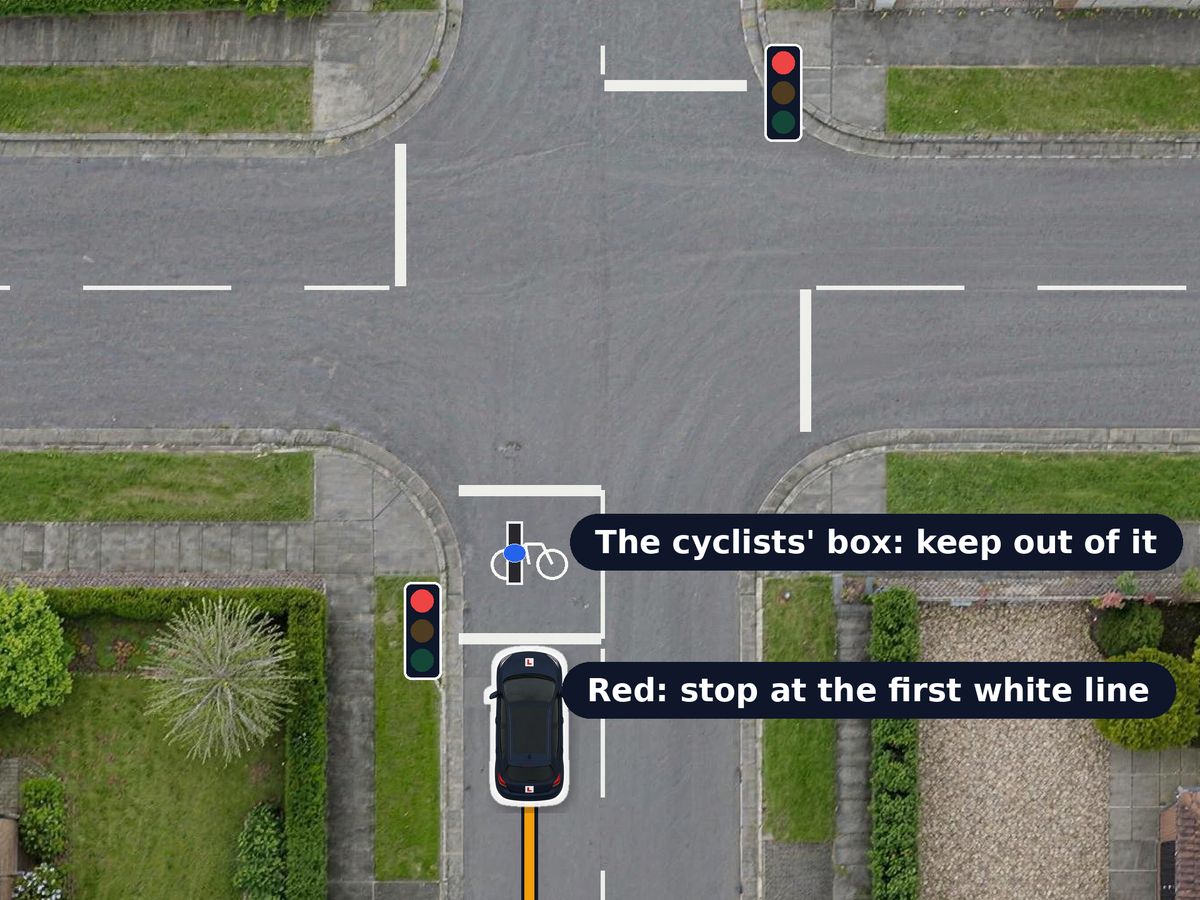
Cyclists' boxes: the first white line
Some lights have two stop lines with a bicycle painted between them, so cyclists can wait ahead of the traffic, where you can see them.
- At amber or red, stop at the first line. Keep out of the box.
- Over the first line when it turns red? Stop as soon as you can, and at the second line at the latest.
- On green, give the cyclists time and room to move off first.
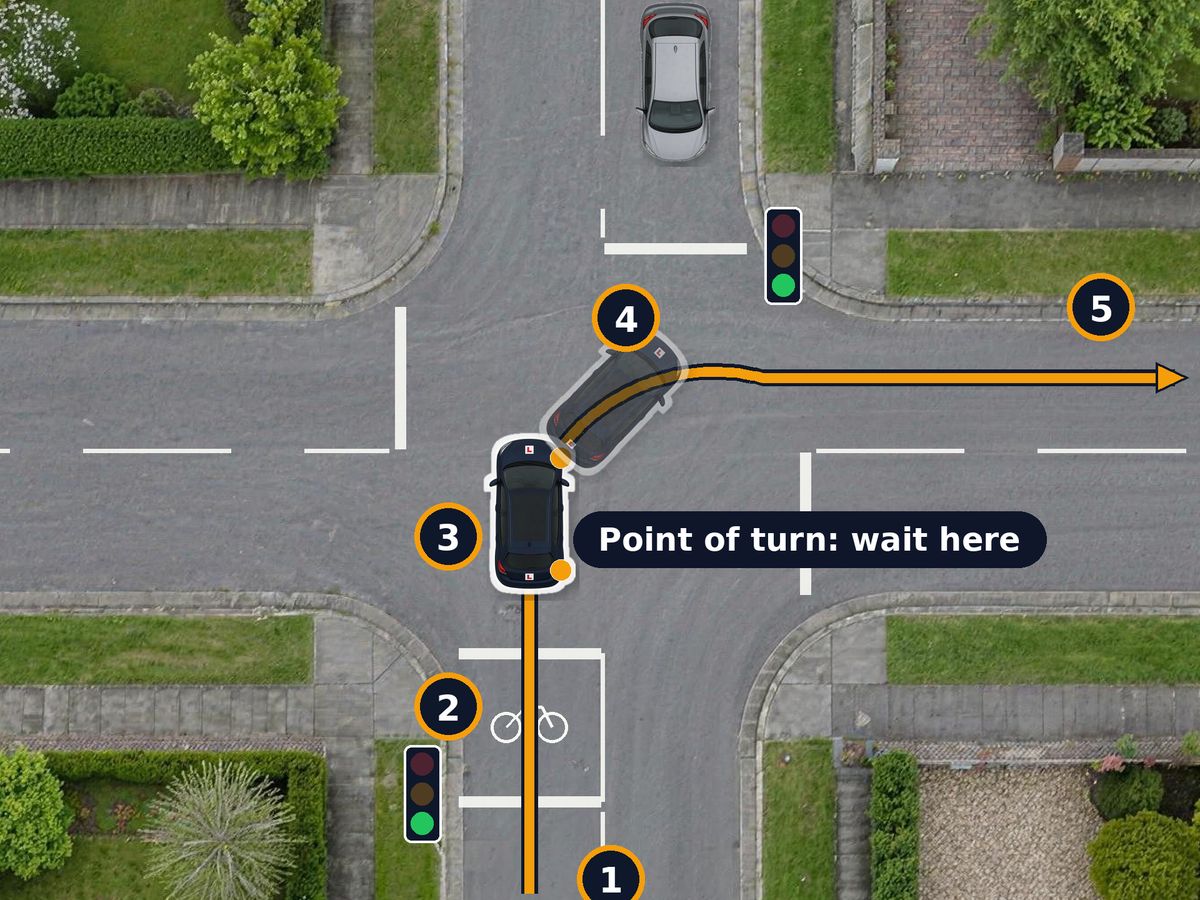
Turning right at traffic lights
Red: wait at the first white line
Signal right and position just left of the middle of your lane, as for any right turn. Stop at the first line, out of the cyclists' box.
Green: forward to the point of turn, if it is clear
Move forward into the junction to where the middle of your road meets the middle of the new one, wheels straight. Only if there is room for you.
Wait there for a safe gap
Oncoming traffic going straight on has priority. Wait at the point of turn, not back at the line, so you do not hold up the traffic behind.
When the lights change, finish the turn
You are already past the line, so when the lights go red and oncoming traffic stops, check it really has stopped, then complete the turn.
Into the left of the new road
Look out for people crossing the road you are turning into, and for anyone running the red.
Filter arrows and lanes
A green arrow can light up beside the main lights. If the way is clear you may go but only in the direction shown by the arrow.
It applies whatever the other lights are showing.
- Read the lane arrows early. Painted arrows and signs show which lane goes where. Get into the right one in good time.
- A filter lane is only for traffic going that way. Do not use it to get past the queue.
- Leave room for others, especially cyclists, to get into the right lane.
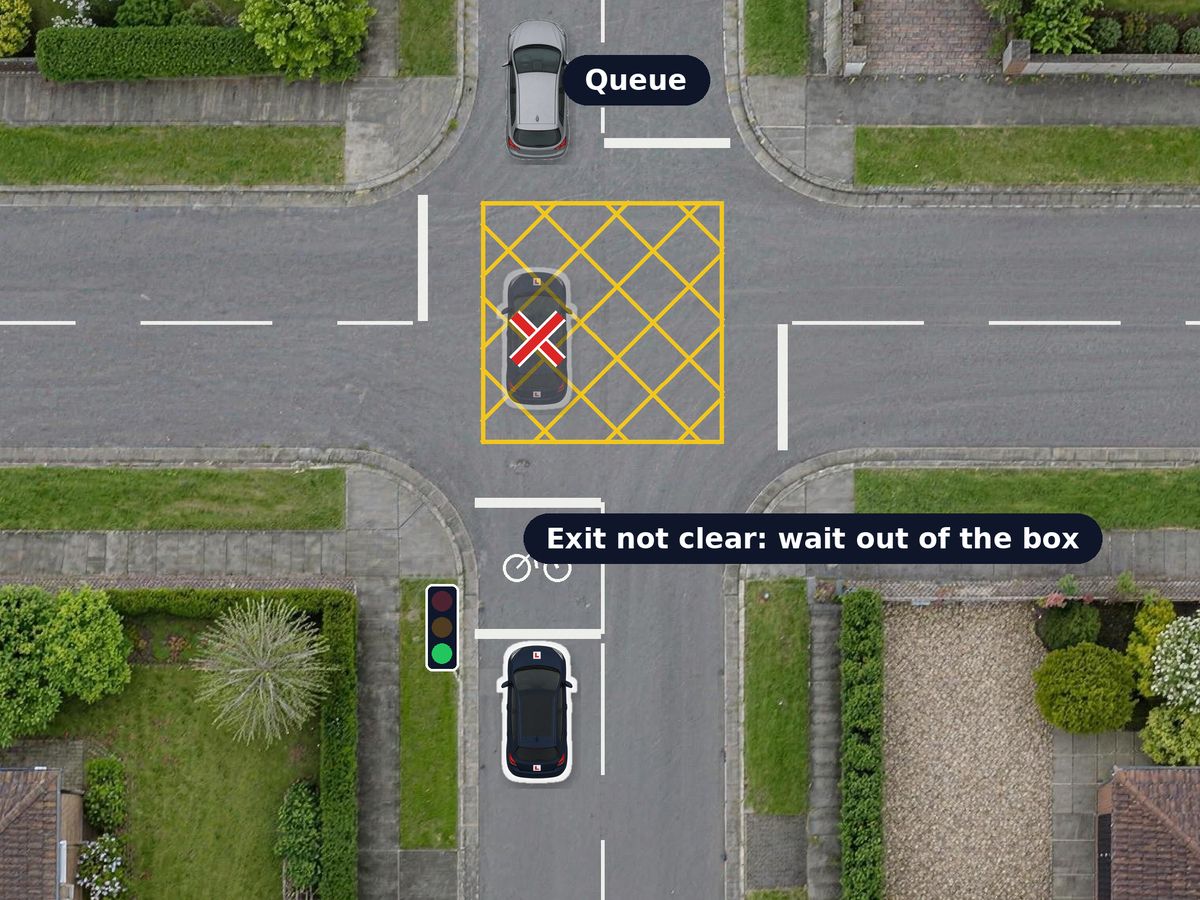
Yellow box junctions
The yellow criss-cross lines keep the middle of a busy junction clear, so traffic crossing your path is never blocked.
- Do not enter until your exit is clear, even on green. If the road you want is queued back to the box, wait at your line.
- The exception: turning right, you may wait in the box if only oncoming traffic, or others waiting to turn right, stops you.
When the lights are not working
Lights that are out, or stuck, give nobody priority. Treat the junction as an unmarked one: slow right down, look all ways, and only go when you are sure it is safe. If a police officer or traffic officer is directing traffic, follow their signals instead.
Traffic lights quiz
Ready when you are
- 10 questions
- About 3 minutes
- Answers explained
- Nothing saved
Questions people ask
Can you go through on amber?
Only if you have already crossed the stop line when it turns amber, or you are so close that stopping might cause a collision. Otherwise amber means stop.
What if I am over the first line of the cyclists' box when the light turns red?
Stop as soon as you can, and at the second line at the latest. Then give the cyclists time and room to move off when it turns green.
Can you wait in a yellow box junction to turn right?
Yes, if your exit is clear and you are only held up by oncoming traffic, or by others waiting to turn right. Otherwise do not enter the box until your exit is clear.
What do you do if traffic lights are not working?
Treat the junction as an unmarked one, where nobody has priority. Slow right down, look all ways, and only go when it is safe.
Signed in
You are already on Driving Test Hero
Signed in as . Your test, your matches and your email settings are on My swaps.
Go to My swapsFree · about a minute
Not ready for your test date?
You do not have to sit it unready. Most learners want an earlier test, so someone at your centre may well want yours, and a swap gives you their later date with no new fee. DVSA does it over the phone. Ready sooner? It works the other way too. We email you when a learner who could swap with you joins, and your email is never shown to anyone.
Already signed up? Sign in
One email to confirm, no password, and one click takes you off the list. How we handle your details.
No test booked yet? There is nothing to swap until you have one. Book on GOV.UK, then come back.