
Crossroads: going ahead, turning right and unmarked crossroads
A crossroads is two junctions in one: traffic can come from four ways, and someone may pull out from the road opposite. Here is how to handle it, with a quiz at the end.
Turning in and pulling out work just as at any junction: see junctions, step by step for the routine. This page is about what is different at a crossroads.
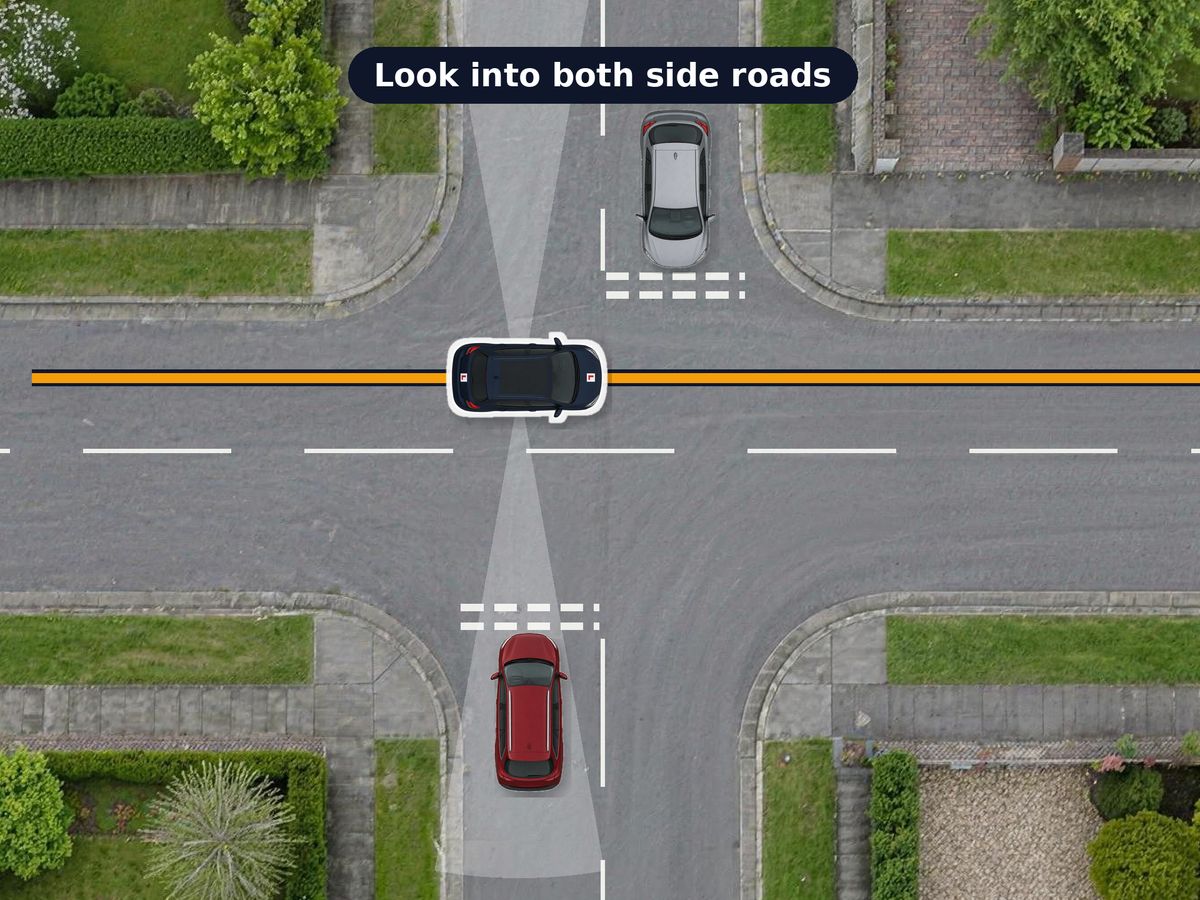
Going ahead on the main road
The give way lines across the side roads mean you have priority. That does not mean nobody will pull out.
- Look into both side roads as you approach, left and right.
- Ease off and cover the brake if someone is waiting, or if you cannot see into a side road.
- Watch the driver, not just the car: a car creeping forward, or a driver looking the other way, may come out.
- Do not overtake as you approach or go through a crossroads.
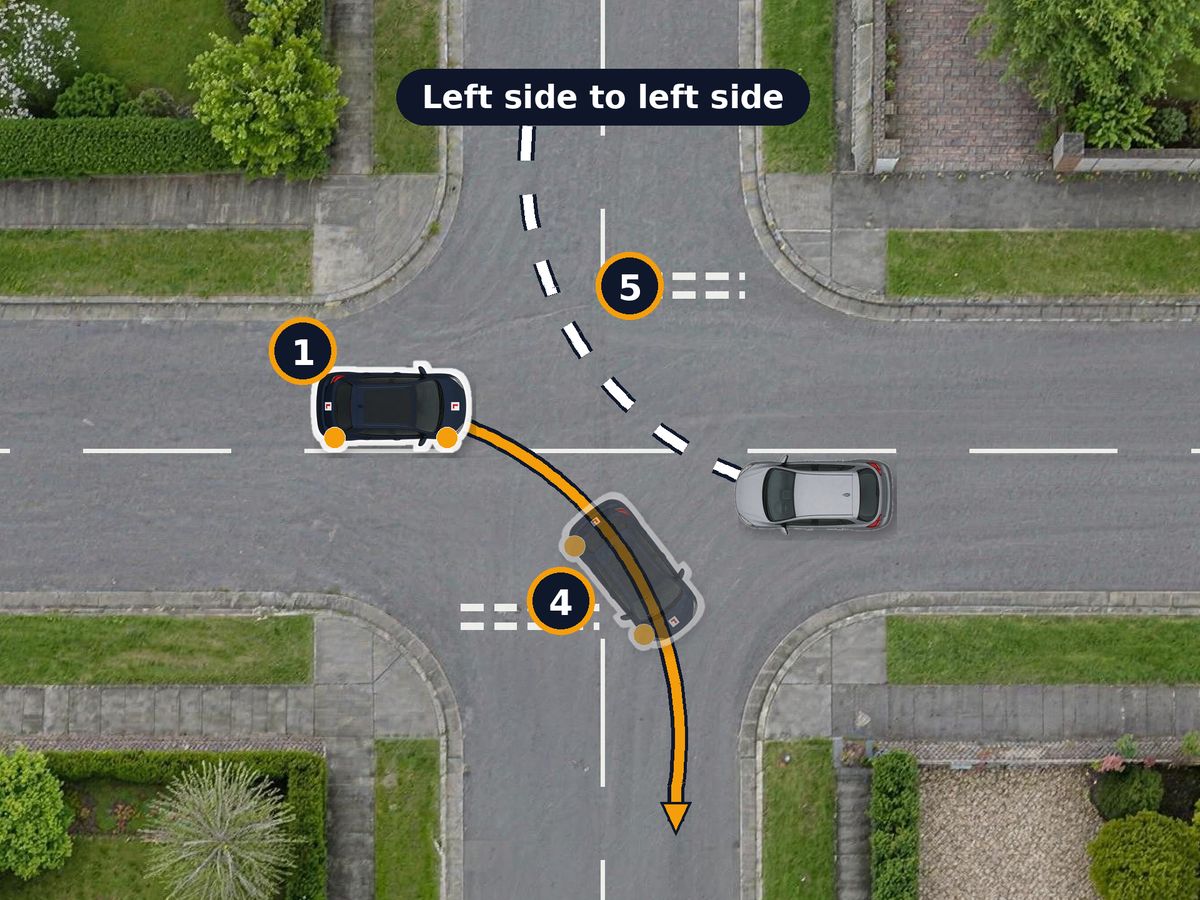
Turning right when the car opposite is too
Mirrors, signal right, just left of the middle
Interior and right mirrors, signal right, then move to just left of the middle of the road, as at any right turn.
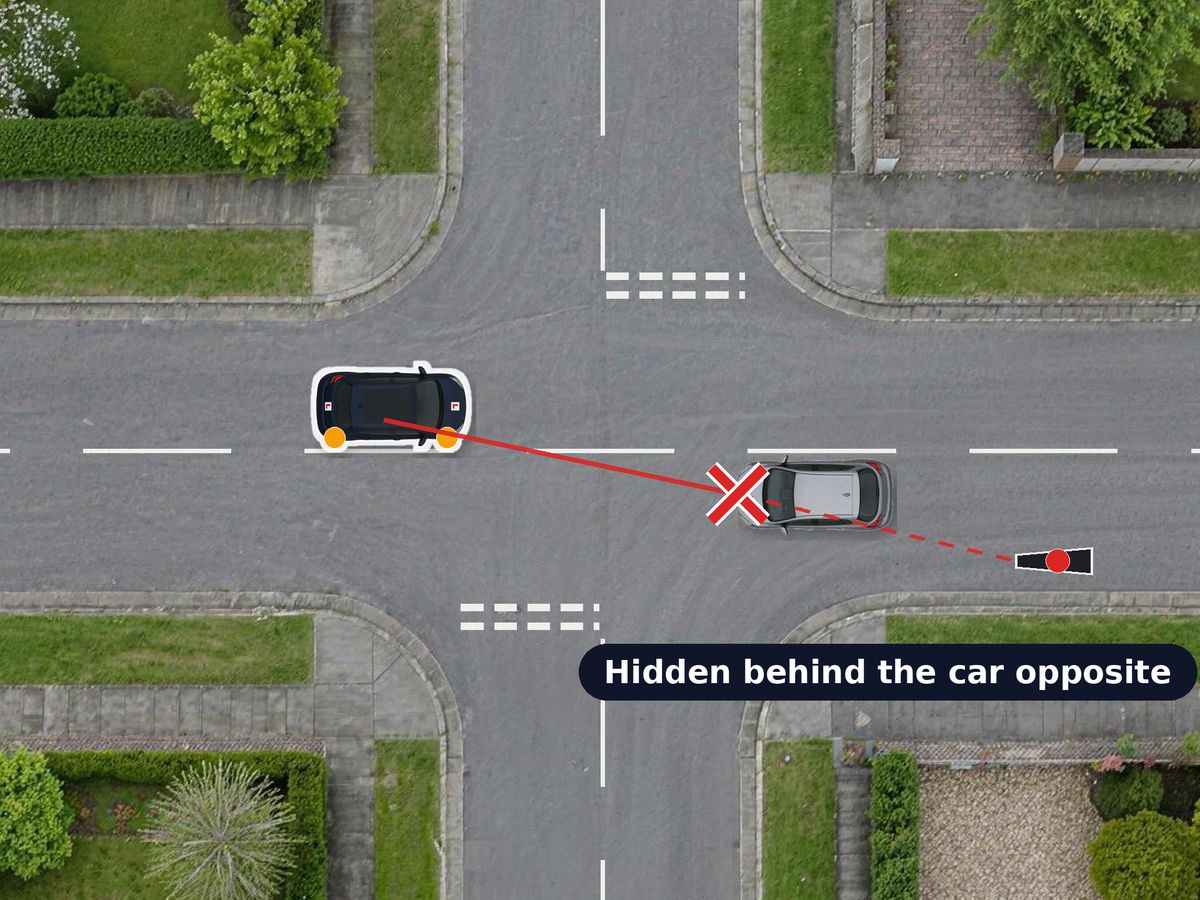
A car opposite is turning right too
Neither of you has priority over the other. Wait with your wheels straight and see where the other driver is going and how they are positioned.
It hides the road behind it: wait and look
You cannot see past it. A motorcyclist or cyclist can come up on its left, out of your view. Wait until you can see, or until it has gone.
Clear: turn, left side to left side
On a small crossroads like this one, you turn in front of each other, one at a time. Check your right mirror and blind spot, then turn into the left of the new road.
Then it turns
The other driver turns once you are out of the way. If they go first, wait for them and look again before you go.
Right side to right side
Keep the other car on your right and turn behind it. You can see the road ahead as you finish the turn. The Highway Code calls this generally the safer method as you have a clear view of any approaching traffic when completing your turn
. It needs a wide junction.
Left side to left side
Turn in front of each other, one at a time. On a small crossroads like the one in the pictures, it is the only way that fits: the cars would need far tighter turns than they can make to pass behind each other. This can block your view of oncoming vehicles, so take extra care.
Pulling out at a crossroads
Pulling out of a side road works just as at a T-junction: the routine, the line, right, left and right again. The difference is the road opposite.
- Watch the side road opposite. A driver there may pull out at the same time, or turn across you.
- Going straight across? You need a gap both ways along the main road, and a clear road opposite to drive into.
- Nobody between the side roads has priority by law. A driver turning right usually waits for one going ahead or turning left, as on a main road, but never assume it: wait until you are sure what they are doing.
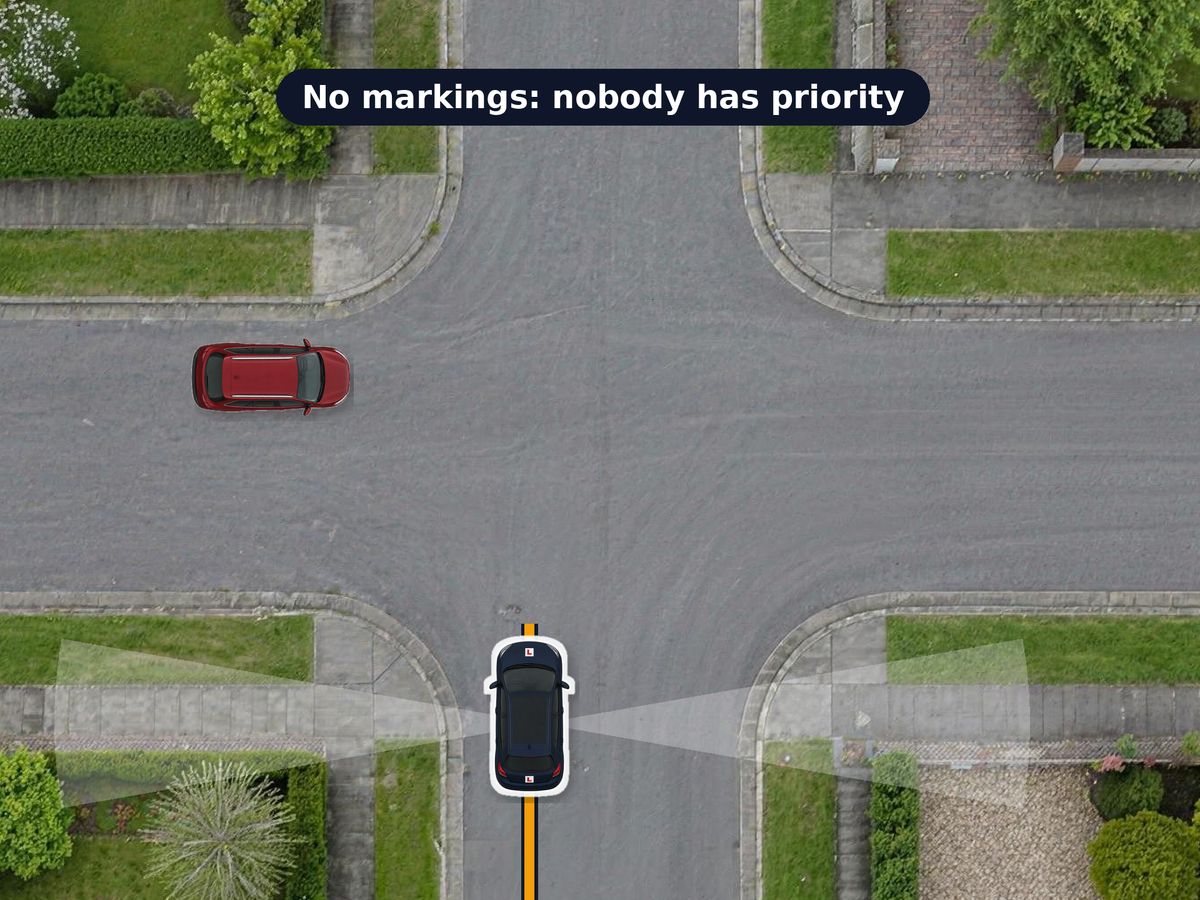
Unmarked crossroads
No give way lines and no signs: neither road is the main road, and nobody has priority. You find them on estates and in the country.
- Slow right down, so you could stop if someone comes out.
- Look all ways before you go, and keep looking.
- Do not assume the other driver will stop for you, even if you are on the wider road.
- If in doubt, give way, especially to a large vehicle that needs room to turn.
Crossroads quiz
Ready when you are
- 10 questions
- About 3 minutes
- Answers explained
- Nothing saved
Questions people ask
Who has priority at an unmarked crossroads?
Nobody. The Highway Code says to look out for unmarked junctions where nobody has priority
. Slow right down, look all ways and be ready to stop, whichever road you are on.
Do you turn right in front of or behind the car opposite?
Either can be right. Passing behind each other (right side to right side) gives you the better view and is generally the safer, but it needs a wide junction. On most small crossroads there is only room to turn in front of each other (left side to left side), so take extra care, because the other car can hide traffic behind it.
What is the difference between a crossroads and a T-junction?
A crossroads has a side road on both sides of the main road, so as well as main road traffic you need to watch the side road opposite, where a driver may pull out or turn across you.
Should I flash my lights to let the driver opposite turn?
No. Flashing headlights only means you are there, and you may not see what is coming behind you. Let other drivers judge it for themselves.
Signed in
You are already on Driving Test Hero
Signed in as . Your test, your matches and your email settings are on My swaps.
Go to My swapsFree · about a minute
Not ready for your test date?
You do not have to sit it unready. Most learners want an earlier test, so someone at your centre may well want yours, and a swap gives you their later date with no new fee. DVSA does it over the phone. Ready sooner? It works the other way too. We email you when a learner who could swap with you joins, and your email is never shown to anyone.
Already signed up? Sign in
One email to confirm, no password, and one click takes you off the list. How we handle your details.
No test booked yet? There is nothing to swap until you have one. Book on GOV.UK, then come back.