
Hazards and defensive driving: spotting trouble early
See it early, give yourself room, and expect other people to make mistakes. Each step matches the numbers on the pictures, and there is a quiz at the end.
A hazard is anything that might make you change speed or direction. Deal with each one the same way as a junction: mirrors, signal if it helps, position, speed, then look and decide. The earlier you spot it, the calmer it is.
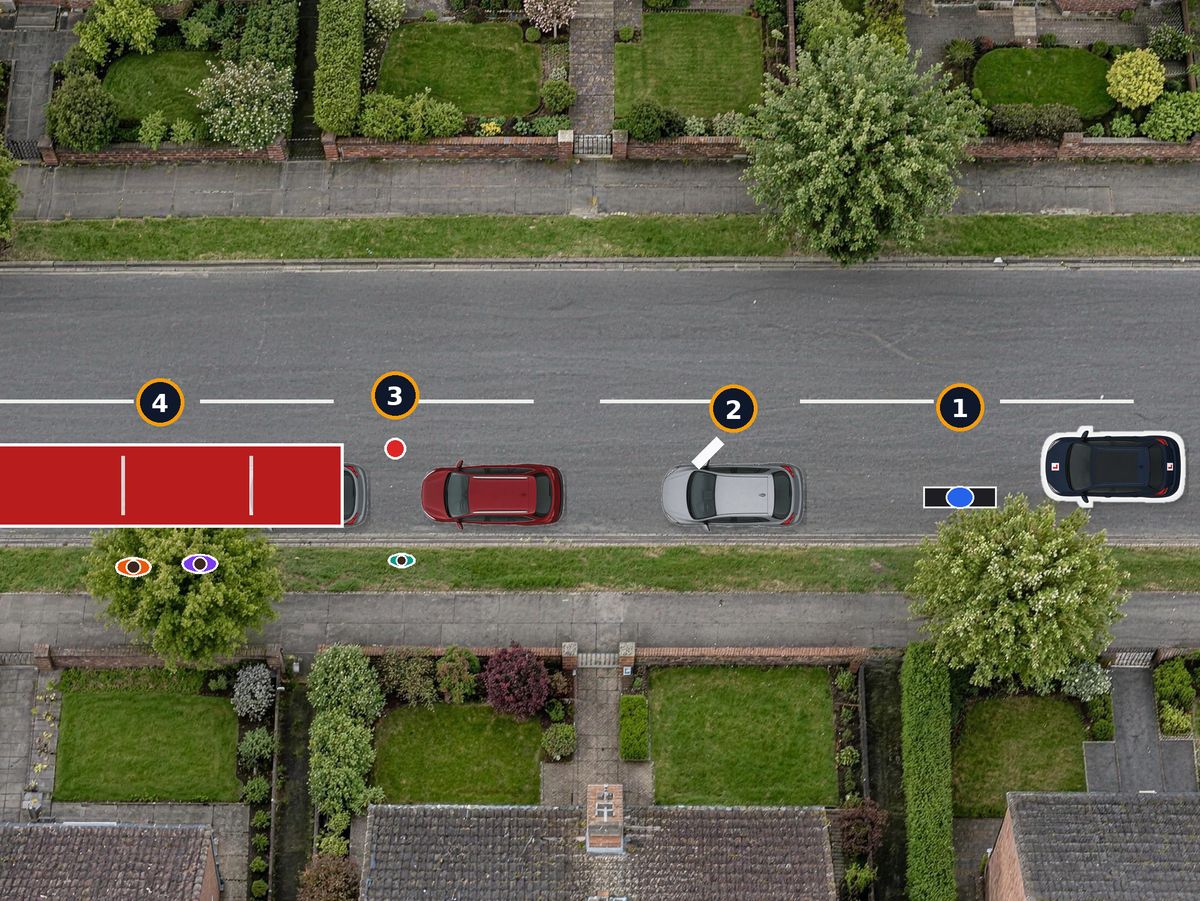
Spotting the clues
Look well ahead, not just at the car in front, and check your mirrors every few seconds. Most hazards give you a clue first.
A cyclist ahead
Give them plenty of room, and watch for a wobble or a sudden turn. If you cannot give at least 1.5 metres, wait behind.
Someone in a parked car
A door may open, or the car may pull out. Give more room, or slow down.
A ball in the road
A child may run after it. Slow right down and be ready to stop.
A bus at a stop
People may step out in front of it, and it may pull away. Give way to it if you safely can.
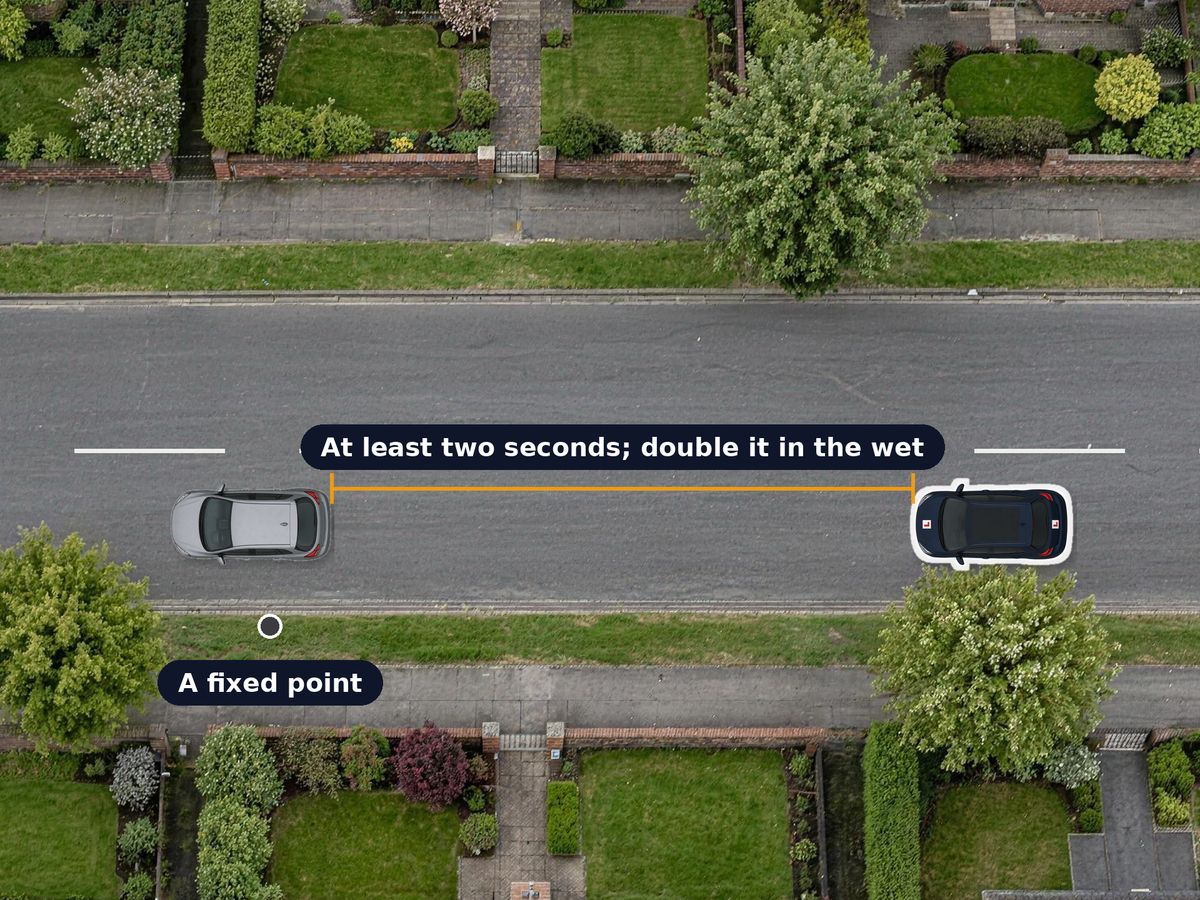
Your gap: two seconds, or more
The gap in front is your time to react. Measure it in seconds, so it grows by itself as you go faster.
- Count it. When the car ahead passes a post or a mark, count two seconds. Reach the same point before you finish? Drop back.
- Wet road:
The gap should be at least doubled on wet roads
. - Ice:
up to ten times greater on icy roads
. - Someone close behind you? Leave a bigger gap in front, so you never have to brake hard.
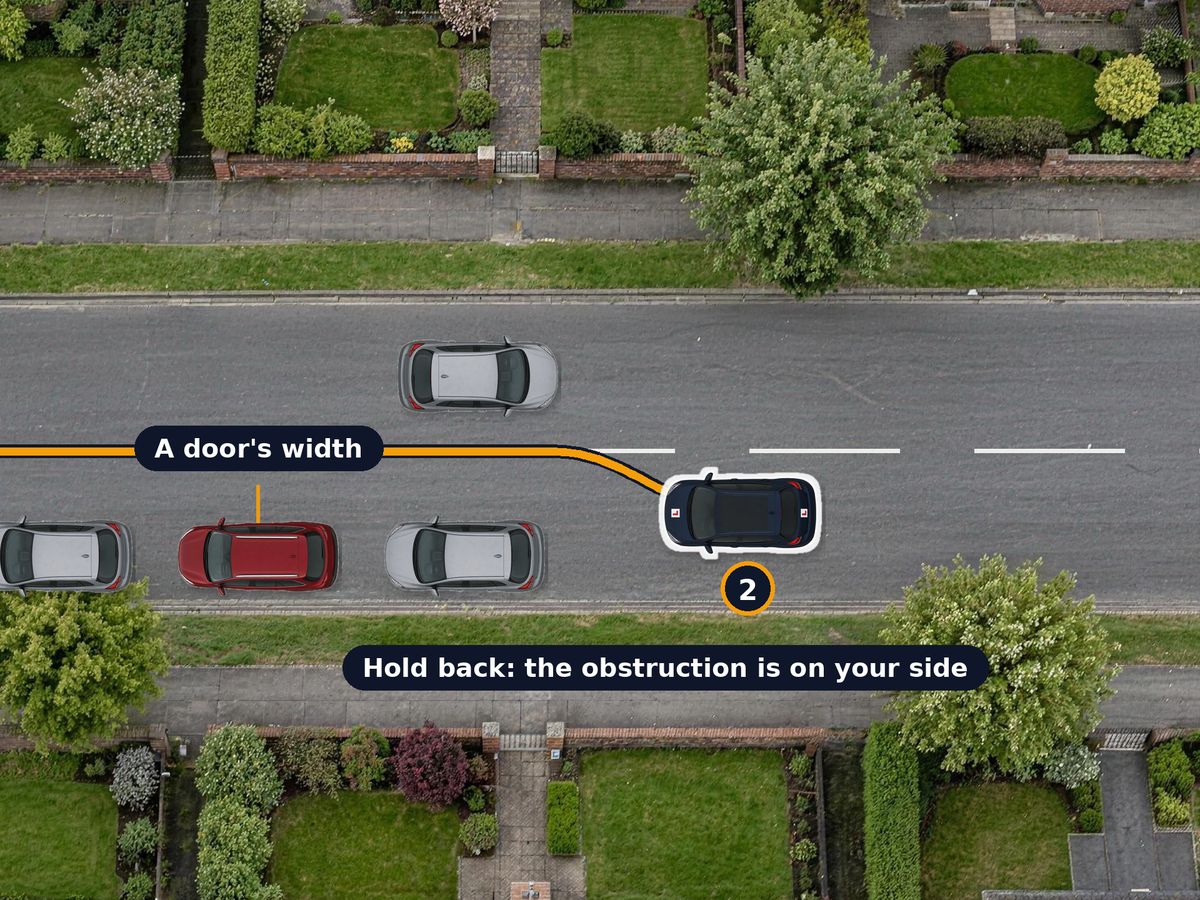
Parked cars, with traffic coming
Plan early
Parked cars on your side and traffic coming: spot it well before you reach them, and check your mirror.
Hold back, with a view
The obstruction is on your side, so the oncoming traffic goes first. Wait about a car length back and a little out, where you can see past and be seen, and can pull out without a sharp turn. Not tucked in right behind them.
Clear: mirrors, then move out
Pass with about a door's width to spare, in case a door opens or someone steps out between the cars.
Back to your normal position
Once you are past, move back in gently. Do not cut in.
People who need more room
- Children near schools, parks, parked cars and ice cream vans may run out without looking.
- Cyclists: at least 1.5 metres when you overtake at lower speeds, more when going faster. Watch for a wobble or a sudden turn.
- Motorcyclists:
It is often difficult to see motorcyclists and cyclists
, andthey could be approaching faster than you think
. Look twice. - Horse riders: pass slowly and at least 2 metres away, or wait.
- Older people and anyone who is slow to cross: be patient.
- Buses: give them priority when you safely can,
especially when they signal to pull away from stops
.
Driving defensively
Defensive driving means expecting other people to make mistakes, and leaving yourself the time and room to deal with them.
- Assume they have not seen you. A driver looking your way may still pull out.
- Do not trust a signal on its own. Wait until a car is actually turning.
- Cover the brake when something might happen: a child near the road, a car edging out.
- Keep a way out. In traffic, stop where you can see the tyres of the car in front touching the road.
- Stay calm. Let others make their mistakes without joining in: no racing, no tailgating, no horn in anger.
Hazards quiz
Ready when you are
- 10 questions
- About 3 minutes
- Answers explained
- Nothing saved
Questions people ask
What is the two-second rule?
Leave at least two seconds between you and the vehicle in front. When it passes a fixed point, count two seconds; if you get there before you finish, drop back. Double it in the wet, and leave far more on ice.
Who gives way when parked cars narrow the road?
If the parked cars are on your side, you do. The Highway Code says to give way to oncoming vehicles before passing parked vehicles or other obstructions on your side of the road
.
How much room should I give a cyclist?
At least 1.5 metres when overtaking at lower speeds, and more when going faster. If you cannot give that room safely, wait behind until you can.
What does defensive driving mean?
Driving as if other people may make mistakes: they may not see you, signal wrongly, or step out. You look further ahead, keep a gap, and keep your speed so you always have time and room to react.
Signed in
You are already on Driving Test Hero
Signed in as . Your test, your matches and your email settings are on My swaps.
Go to My swapsFree · about a minute
Not ready for your test date?
You do not have to sit it unready. Most learners want an earlier test, so someone at your centre may well want yours, and a swap gives you their later date with no new fee. DVSA does it over the phone. Ready sooner? It works the other way too. We email you when a learner who could swap with you joins, and your email is never shown to anyone.
Already signed up? Sign in
One email to confirm, no password, and one click takes you off the list. How we handle your details.
No test booked yet? There is nothing to swap until you have one. Book on GOV.UK, then come back.