
Pulling up on the right and reversing: step by step
When to cross, how close to stop, where to look as you reverse, and how to rejoin. Each step matches the numbers on the pictures, and there is a quiz at the end.
On the test you may be asked to pull up on the right-hand side of the road, reverse for around 2 car lengths, and rejoin the traffic
. It is one of three reversing exercises, and you will do one of them. What happens during the test.
The examiner asks while you are driving, on a straight road with a clear view, and usually says Pull up on the right when it is safe to do so
. You choose the spot, so choose a good one.
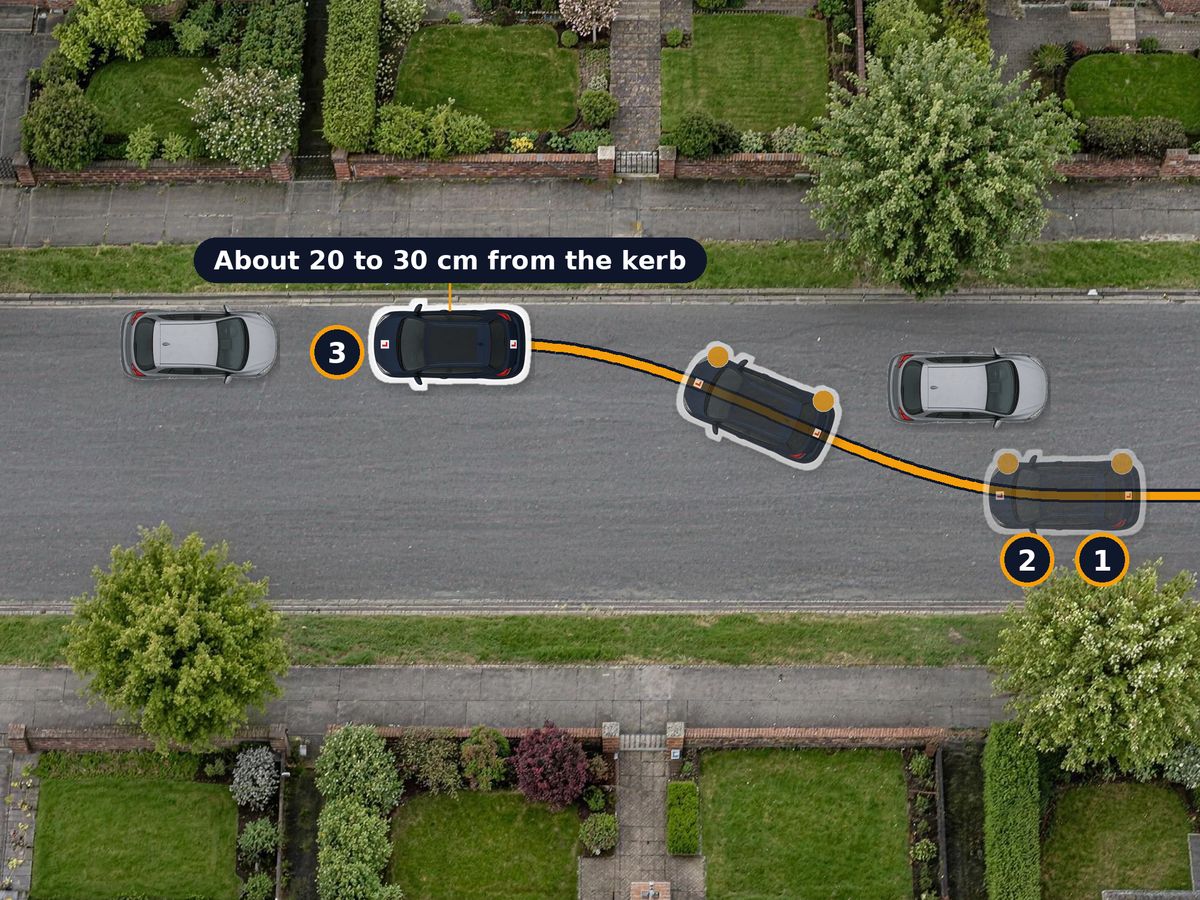
Pulling up on the right
Mirrors, signal right, move out towards the middle
Interior mirror, right mirror and a look over your right shoulder. If it is safe, signal right and move out towards the centre line, as if you were turning right.
Wait for oncoming traffic to pass
Stop just left of the centre line if anything is coming towards you. Keep checking your mirrors while you wait.
Cross at a gentle angle and stop close to the kerb
When there is a safe gap, check again and cross at a shallow angle rather than a sharp turn, so the front wheels do not meet the kerb. Stop parallel with it, about 20 to 30 cm away, with the wheels straight. If a car is parked ahead, stop about half a car length behind it: just enough room to pull out. Handbrake on, neutral.
Press Play to watch the whole exercise, from moving out to rejoining.
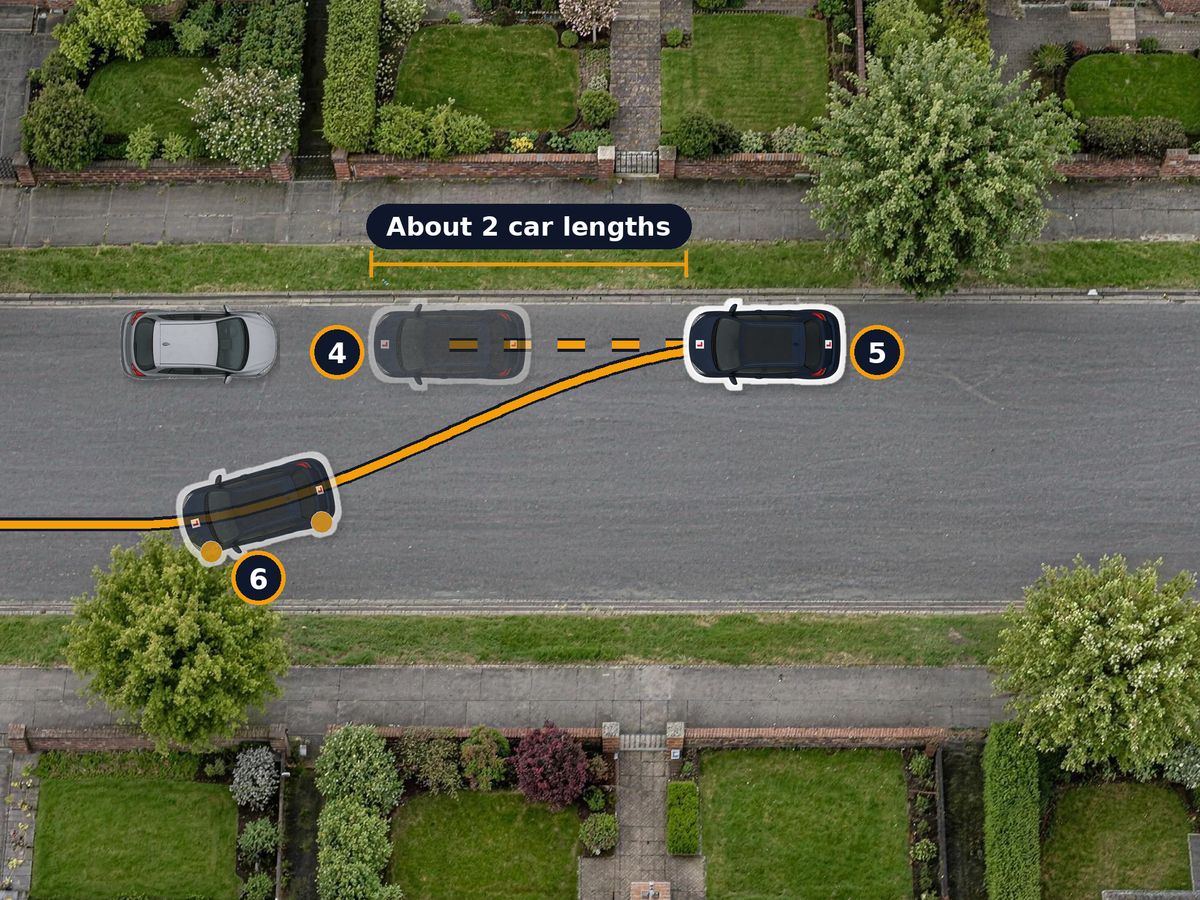
Reversing and rejoining
Look all round, then reverse about two car lengths
Reverse gear, then look all round: both blind spots, all three mirrors and out of the rear window. Reverse slowly, looking mainly out of the rear window, with glances in the right mirror to keep the same gap to the kerb.
Stop, then look all round again
Handbrake on, neutral, and wait. If anything is coming, there is no hurry.
Rejoin when it is clear
First gear, then look all round again: traffic coming towards you in the lane you are in, anything coming up behind in the other lane, and your left blind spot. Signal left if it would help anyone, and pull across to the left side of the road when it is safe.
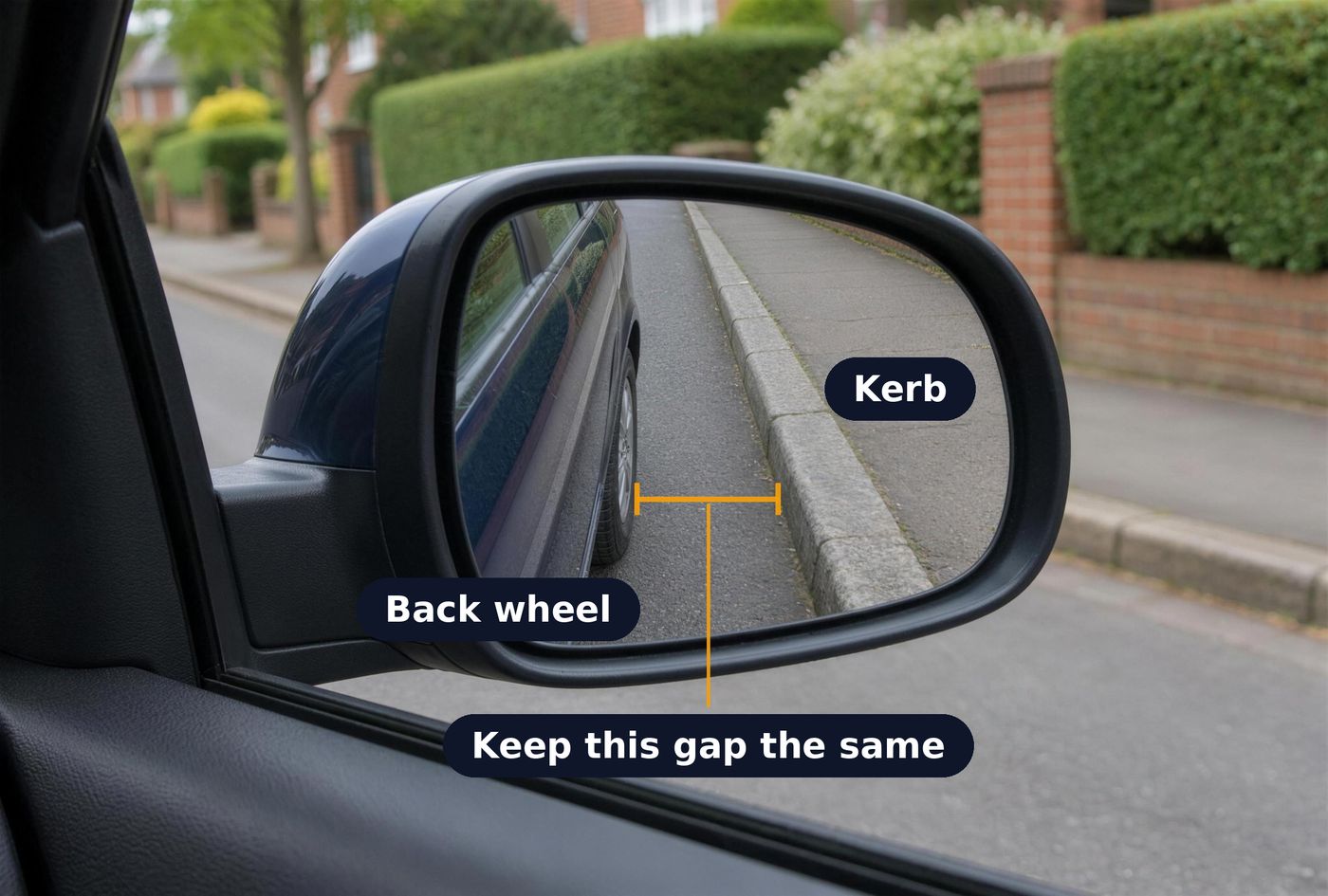
From your seat: keeping close to the kerb
The kerb is on your side, so it is easy to see. Glance at your right mirror as you reverse and keep the gap the same all the way back. If it closes, steer a little away from the kerb; if it opens, a little towards it. Small movements, slowly.
Judging two car lengths: before you start, pick something level with your door, such as a lamp post or a drive. Stop when it is about two car lengths in front of you.
Reference points vary a little by car. How the kerb looks in the mirror depends on the car and how the mirror is set, so practise in the one you will take your test in.
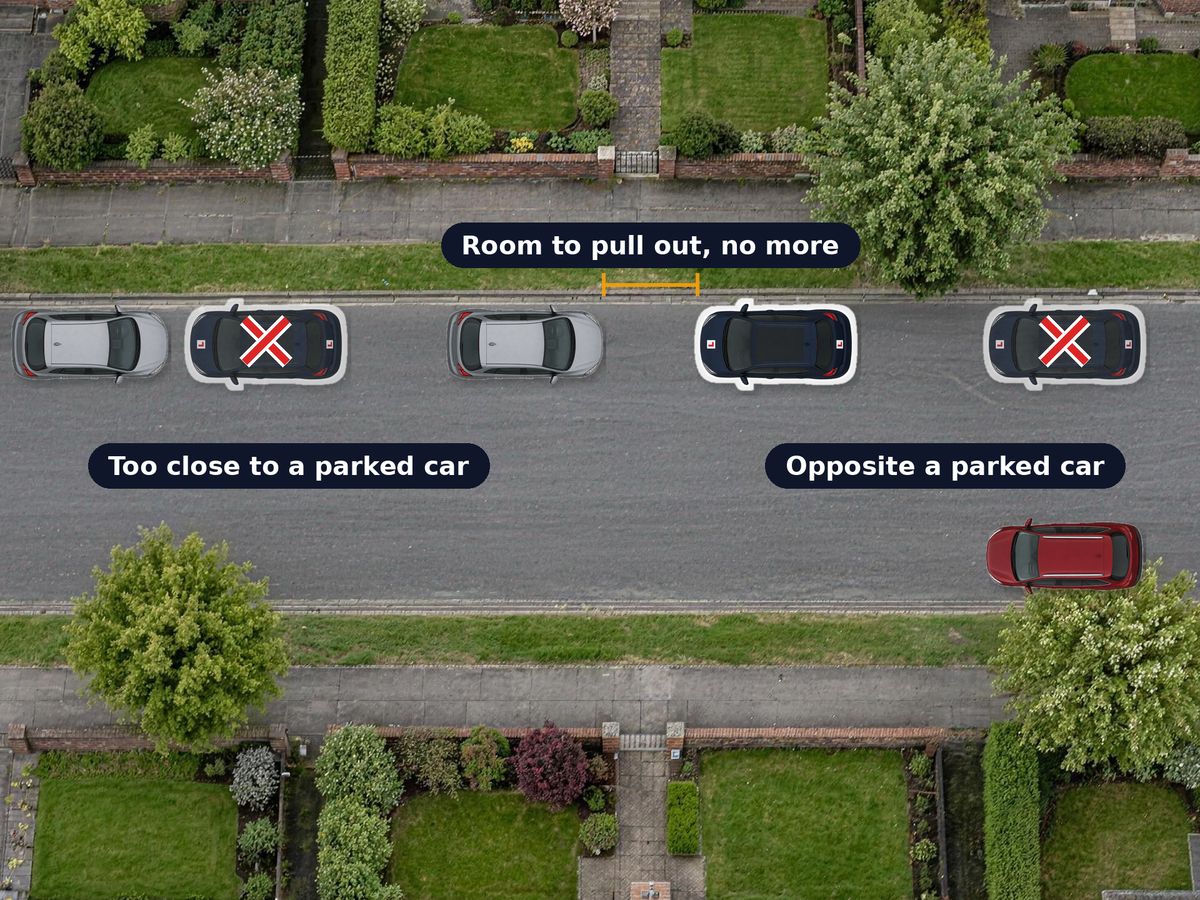
Where to stop, and where not
- Somewhere straight and clear, with a good view ahead and behind, and room to reverse and pull out.
- Not opposite a parked car: you narrow the road for everyone between you.
- Behind a parked car, leave just enough room to pull out: about half a car length. Right up to it you lose the view and the room; a whole car space is more than you need.
- Not near a junction, a bend, a bus stop or the brow of a hill, and not across a driveway if you can help it.
Outside the test, the Highway Code asks you not to park facing against the traffic, and at night it is the law: You MUST NOT park on a road at night facing against the direction of the traffic flow unless in a recognised parking space.
The Highway Code on waiting and parking.
Other road users
- Oncoming traffic has priority while you cross, and again when you rejoin, because it is in the lane you are parked in.
- People walking may cross behind you while you reverse. Stop and let them.
- A car pulling up behind you can stop the exercise. The examiner will ask you to drive on.
The examiners' guidance says The candidate should show proper care for the safety of other road users
as they pull across, reverse and move off. A mistake might not affect your test result if it's not serious
, so carry on driving safely. DVSA guidance for examiners.
Pulling up on the right quiz
Ready when you are
- 10 questions
- About 3 minutes
- Answers explained
- Nothing saved
Questions people ask
How do you pull up on the right on the driving test?
Mirrors and a look over your right shoulder, signal right, and move out towards the centre line. Wait for oncoming traffic, then cross at a gentle angle and stop parallel, about 20 to 30 cm from the kerb. Look all round, reverse slowly about two car lengths, stop, then look all round again and rejoin on the left when it is clear.
How far do you reverse when you pull up on the right?
About two car lengths. The examiner usually says I'd now like you to reverse back for about 2 car lengths, keeping reasonably close to the kerb.
What if a car pulls up behind me?
If it stops you reversing, the examiner asks you to drive on and an exercise is done later in the test. A car stopping in front of you does not end the exercise, but take care when you pull out past it.
Is it legal to park on the right?
For a short stop in daylight, yes, though the Highway Code asks you not to park facing against the traffic flow. At night it is clearer: You MUST NOT park on a road at night facing against the direction of the traffic flow unless in a recognised parking space.
Signed in
You are already on Driving Test Hero
Signed in as . Your test, your matches and your email settings are on My swaps.
Go to My swapsFree · about a minute
Not ready for your test date?
You do not have to sit it unready. Most learners want an earlier test, so someone at your centre may well want yours, and a swap gives you their later date with no new fee. DVSA does it over the phone. Ready sooner? It works the other way too. We email you when a learner who could swap with you joins, and your email is never shown to anyone.
Already signed up? Sign in
One email to confirm, no password, and one click takes you off the list. How we handle your details.
No test booked yet? There is nothing to swap until you have one. Book on GOV.UK, then come back.