
Moving off and stopping: from the kerb, at an angle and on hills
Getting ready, moving off from the kerb, from behind a parked car and on a hill, and pulling up somewhere safe. Each step matches the numbers on the pictures, and there is a quiz at the end.
On the test You'll be asked to pull over and pull away
, including a normal stop at the side of the road
, pulling out from behind a parked vehicle
and a hill start
. Every one is the same routine: get the car ready, look properly, then go only when it is safe.
Before you start: the cockpit checks
Many instructors teach these as DSSSM. Do them every time you get in, before the engine starts.
Doors
All shut properly. Check the light on the dashboard has gone out.
Seat
Close enough to push the clutch right down with your knee still slightly bent, and the back upright enough to reach the top of the wheel with your wrists. The top of the head restraint at least level with your eyes.
Steering
If it adjusts, set it so you can see the dials and hold the wheel comfortably at about ten to two or quarter to three.
Seatbelt
On, flat and not twisted, across your shoulder and low over your hips.
Mirrors
Interior: as much of the back window as you can see. Door mirrors: a sliver of your own car, with the horizon across the middle.
Then start the engine
Check the handbrake or parking brake is on
and the gear is in neutral
, then start it.
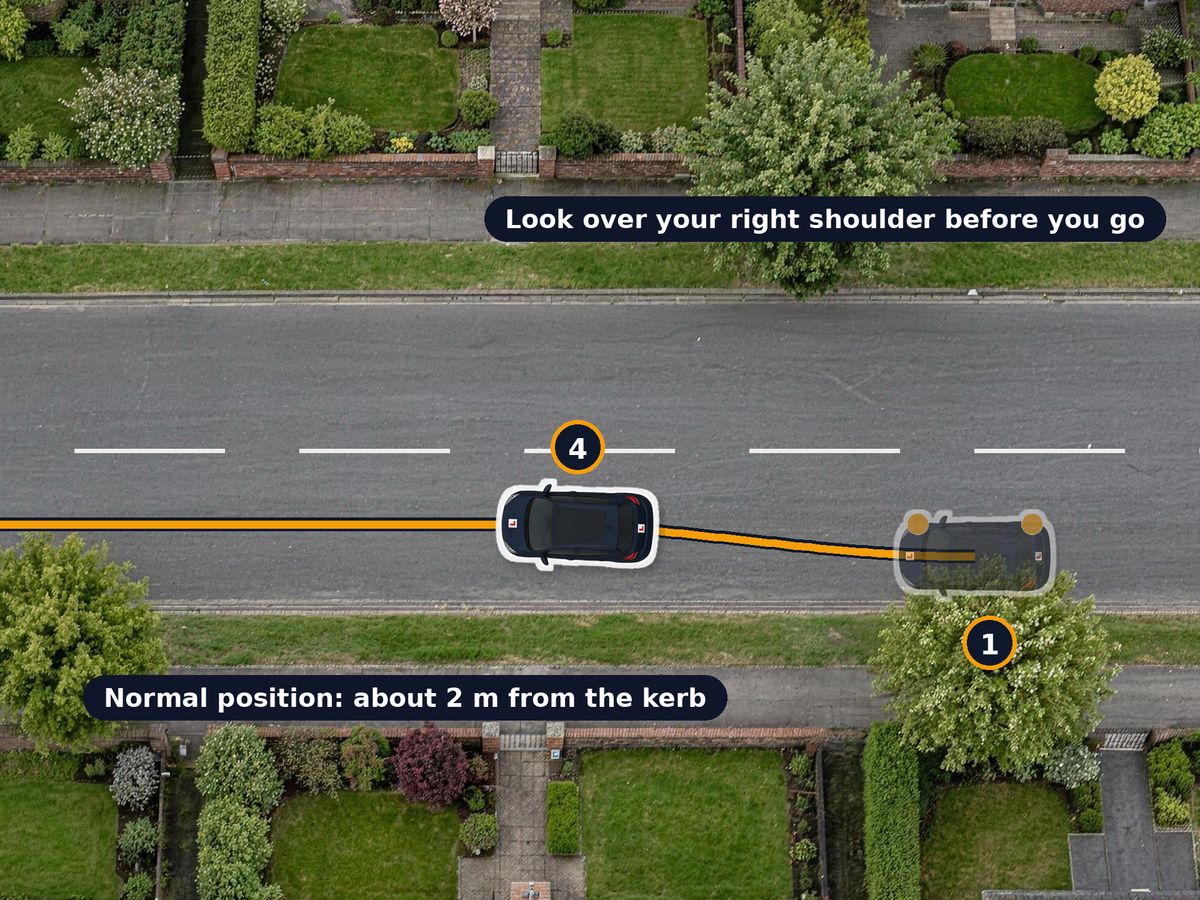
Moving off from the kerb
Prepare
Clutch down, first gear, set a little gas, and bring the clutch up to the biting point: the engine note drops and the car wants to move. Hold it there.
Observe
Interior mirror, right door mirror, then a look over your right shoulder into the blind spot. Anything coming? Wait, and hold the bite or go back to neutral if it is a long wait.
Clear? A final look
Look round again just before you go. Signal right only if it would help someone, such as a driver behind or a person waiting to cross.
Move
Handbrake off, a little more gas, ease the clutch up, and steer gently out to the normal position, about 2 m from the kerb.
Settle in
Cancel any signal, check your mirrors, and build up speed smoothly.
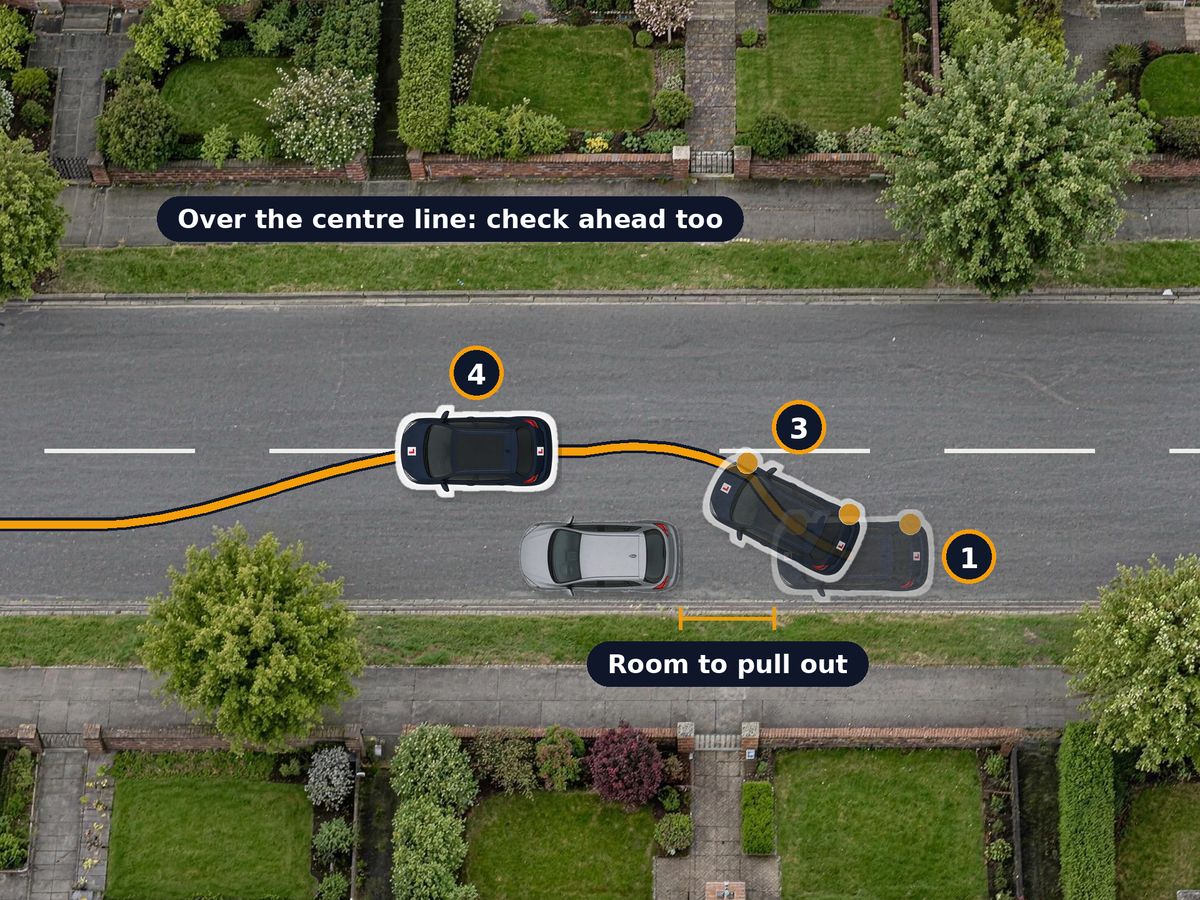
Moving off from behind a parked car
Room to pull out
When you pull in behind a parked car, leave enough room to get out without reversing: about half a car length.
Look all round, and ahead
Mirrors and the right blind spot as usual, and the road ahead: pulling out round the car can put you on the other side of the road.
Slowly, with quick steering
Clear both ways? Signal if it would help someone, then creep forward on full right lock. Slow speed, brisk steering.
Straighten up, a door's width from it
As your front passes its back corner, steer back left so you pass it with about a metre to spare, in case a door opens.
Back to the normal position
Once past, move gently back to the left and carry on.
Hill starts
Uphill
More gas than on the flat, and find the bite until the front of the car lifts slightly and the engine note drops. Observe, then release the handbrake: if it is at the bite it holds the car. Then more gas and the clutch up slowly.
Rolling back?
Push the clutch down and hold the car on the footbrake, put the handbrake on, then start again with a little more gas.
Downhill
Second gear on a steep slope, first on a gentle one. Hold the car on the footbrake, release the handbrake, observe, then ease off the footbrake and bring the clutch up as the car starts to roll.
What the examiner wants
Your control of the car should have prevented it from rolling backwards or stalling.
And the same looking as anywhere else: You should have used your mirrors and checked blind spots to observe your surroundings, and signalled when necessary.
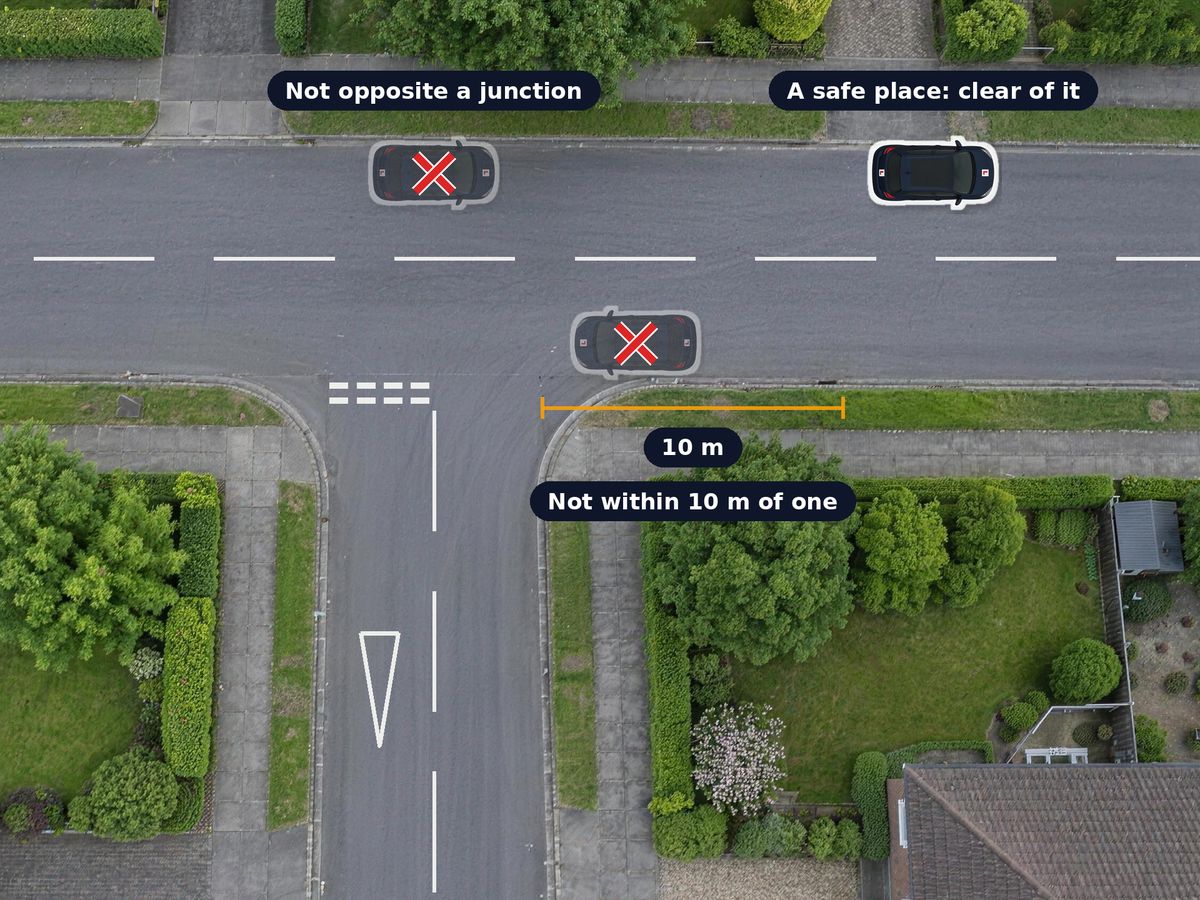
Pulling up on the left
Mirrors
Interior, then left door mirror: is a cyclist or motorcyclist coming up on your left?
Signal, if it would help someone
Left, in good time, but not where it could look like you are turning into a side road.
Position
Ease gradually in towards the kerb, without swerving, to about 20 to 30 cm from it.
Speed and stop
Brake gently and progressively. Clutch down just before you stop, so the engine does not stall.
Secure the car
Handbrake on, neutral, signal off, and feet off the pedals when you are asked to.
Where? The first safe, legal place. The Highway Code says stop as close as you can to the side
, and lists where you must not. DO NOT stop or park
:
opposite or within 10 metres (32 feet) of a junction, except in an authorised parking space
at or near a bus or tram stop or taxi rank
near a school entrance
on a bend
near the brow of a hill or hump bridge
in front of an entrance to a property
Moving off and stopping quiz
Ready when you are
- 10 questions
- About 3 minutes
- Answers explained
- Nothing saved
Questions people ask
What moving off will I do on the driving test?
GOV.UK says you will be asked to pull over and pull away, including a normal stop at the side of the road, pulling out from behind a parked vehicle, and a hill start. You might also be asked to do an emergency stop.
Is stalling a fault?
Stalling once and restarting safely is often only a minor fault, or none. Repeatedly stalling when moving off, or stalling somewhere that causes danger, is marked more seriously. Secure the car, restart, and do your checks again.
Do I have to signal when I move off?
Only if it would help or warn someone. Signalling with nobody about does no harm but does not help either; what matters is that you looked properly first.
How far from the kerb should I stop?
Close to it, about 20 to 30 cm, without touching it. Parking too far from the kerb is one of the common faults on the test.
Signed in
You are already on Driving Test Hero
Signed in as . Your test, your matches and your email settings are on My swaps.
Go to My swapsFree · about a minute
Not ready for your test date?
You do not have to sit it unready. Most learners want an earlier test, so someone at your centre may well want yours, and a swap gives you their later date with no new fee. DVSA does it over the phone. Ready sooner? It works the other way too. We email you when a learner who could swap with you joins, and your email is never shown to anyone.
Already signed up? Sign in
One email to confirm, no password, and one click takes you off the list. How we handle your details.
No test booked yet? There is nothing to swap until you have one. Book on GOV.UK, then come back.