
Town and city driving: lanes, bus lanes and cycle lanes
Picking your lane early, keeping out of bus and cycle lanes, and reading a busy road. Each step matches the numbers on the pictures, and there is a quiz at the end.
In town everything is closer together: junctions, crossings, buses, bikes and people. Speeds are lower, but there is more to read, so look well ahead and decide early.
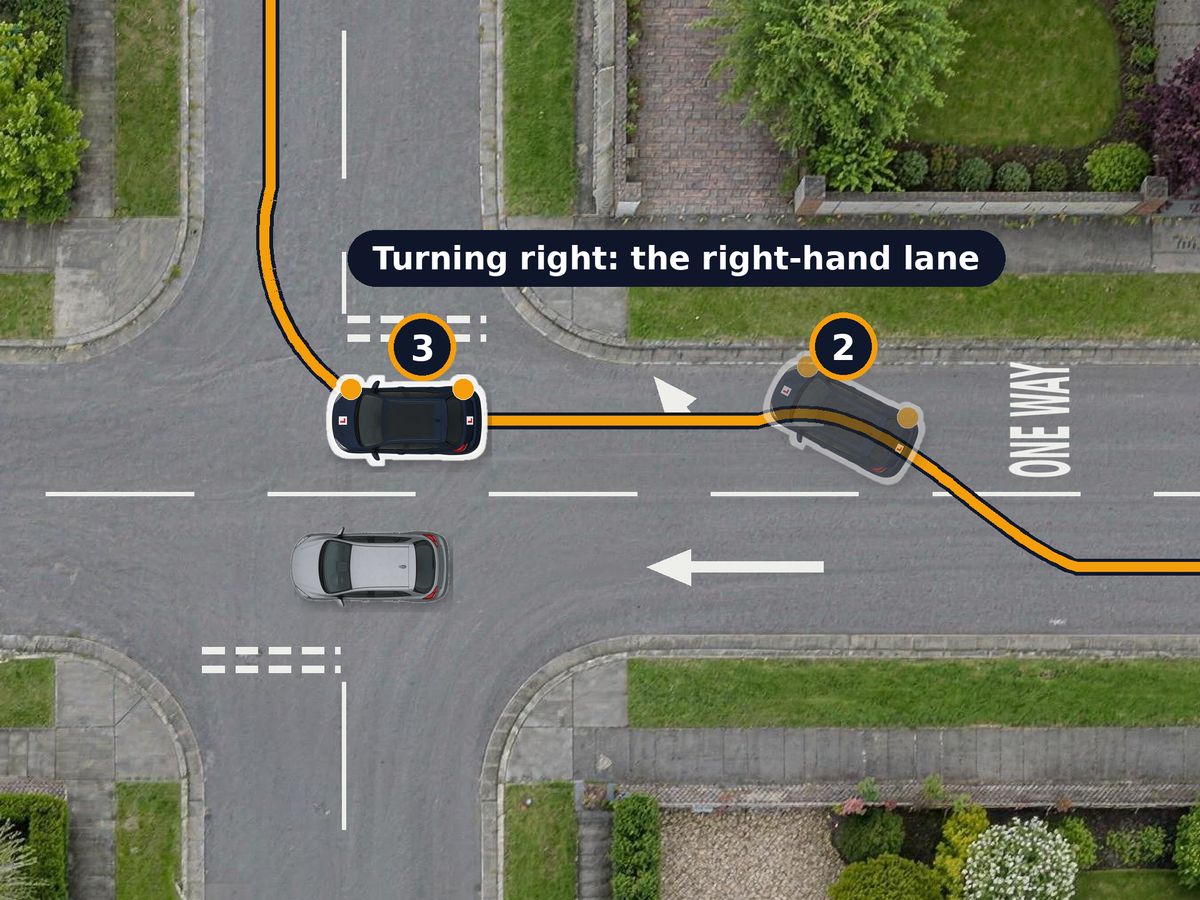
One-way streets: pick your lane early
Work out your lane early
In a one-way street, turning right usually means the right-hand lane. Read the signs and the arrows painted on the road.
Get into it in good time
Mirrors, a look into the blind spot, signal, then move across smoothly, well before the junction.
Look both sides, then turn
Traffic can pass you on either side here. Check your mirror and blind spot, look into the new road for people crossing, then turn.
Into the left of the new road
The road you turn into may be two-way. Keep to its left.
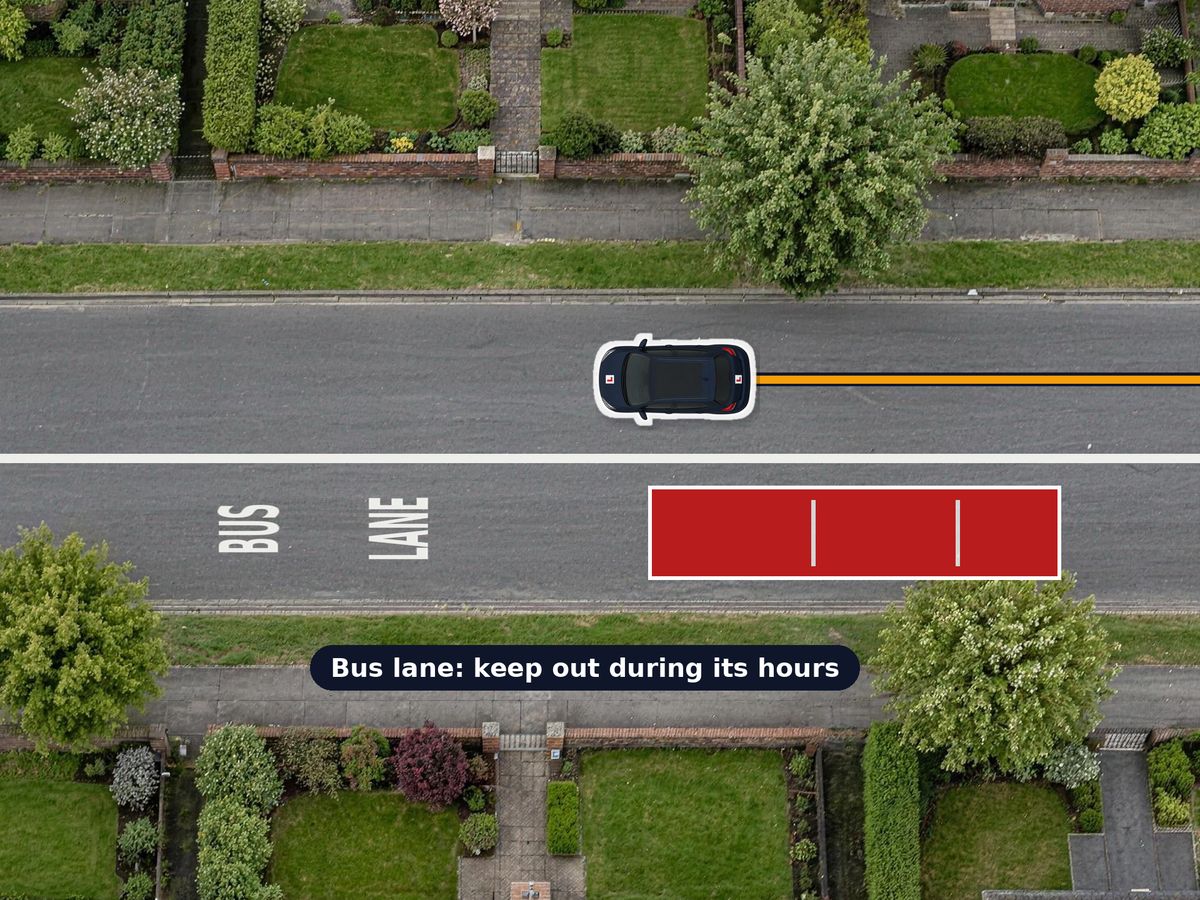
Bus lanes
- Read the sign beside it. It shows the hours the lane operates, and who else may use it, such as taxis or cycles. No times shown means all the time.
- Outside those hours you can usually drive in it.
- Turning left across it: check for buses, cycles and taxis in it first, and cross where the line is broken.
- Contraflow lanes in one-way streets let buses and cycles come the other way. Look out for them.
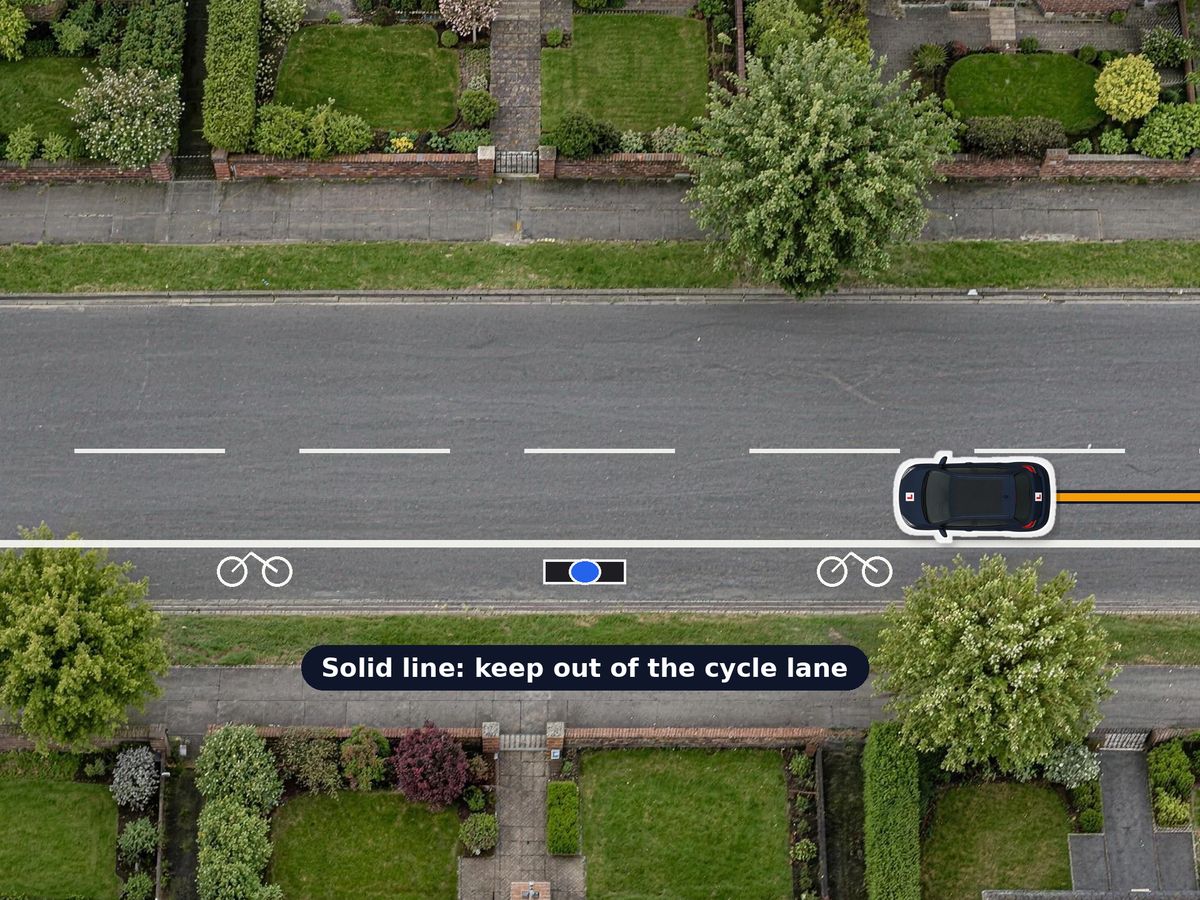
Cycle lanes
- Solid white line: keep out while it is in operation, driving or parking.
- Broken white line: do not drive or park in it unless you cannot avoid it.
- Turning left across one: look in your left mirror and blind spot for cyclists first, and do not cut across them.
- A cyclist on the road next to an empty cycle lane is allowed to be there. Give them room.
Road humps, chicanes and narrowings
These are there to slow you down along the whole stretch, not just at each one.
When you approach these features reduce your speed.
Allow cyclists and motorcyclists room to pass through them.
You should not overtake other moving road users while in these areas.
- At a narrowing, look for a sign or arrows showing who has priority. If there is none, give way to anyone already coming through.
Busy streets: reading the road
- People: crossing between parked cars, at junctions and from behind buses. See hazards and defensive driving.
- Buses and taxis: stopping, pulling out and turning with little warning. Keep a good gap.
- Junctions every few metres: keep them clear in queues, and look into each side road.
- Lines along the kerb: double yellow means no waiting at any time; single yellow means no waiting during the times on the nearby sign.
- Signs and markings: lane arrows, box junctions and bus gates come up quickly. Read ahead.
Town driving quiz
Ready when you are
- 10 questions
- About 3 minutes
- Answers explained
- Nothing saved
Questions people ask
Which lane do you use in a one-way street?
Unless signs or markings say otherwise, the left-hand lane to go left, the right-hand lane to go right, and the most suitable lane to go straight on. Choose it as soon as you can, and remember traffic can pass you on both sides.
Can you drive in a bus lane?
Not during its hours of operation, which are shown on the sign beside it, unless the sign says your vehicle may. Outside those hours you usually can. If no times are shown, it operates all the time.
Can you drive in a cycle lane?
Not one marked by a solid white line during its times of operation. One with a broken line you should only enter if you cannot avoid it.
How do I cope with busy town driving on my test?
Look well ahead, pick your lane early, keep a gap, and take your time. Examiners want to see you deal with what happens safely, not quickly.
Signed in
You are already on Driving Test Hero
Signed in as . Your test, your matches and your email settings are on My swaps.
Go to My swapsFree · about a minute
Not ready for your test date?
You do not have to sit it unready. Most learners want an earlier test, so someone at your centre may well want yours, and a swap gives you their later date with no new fee. DVSA does it over the phone. Ready sooner? It works the other way too. We email you when a learner who could swap with you joins, and your email is never shown to anyone.
Already signed up? Sign in
One email to confirm, no password, and one click takes you off the list. How we handle your details.
No test booked yet? There is nothing to swap until you have one. Book on GOV.UK, then come back.